
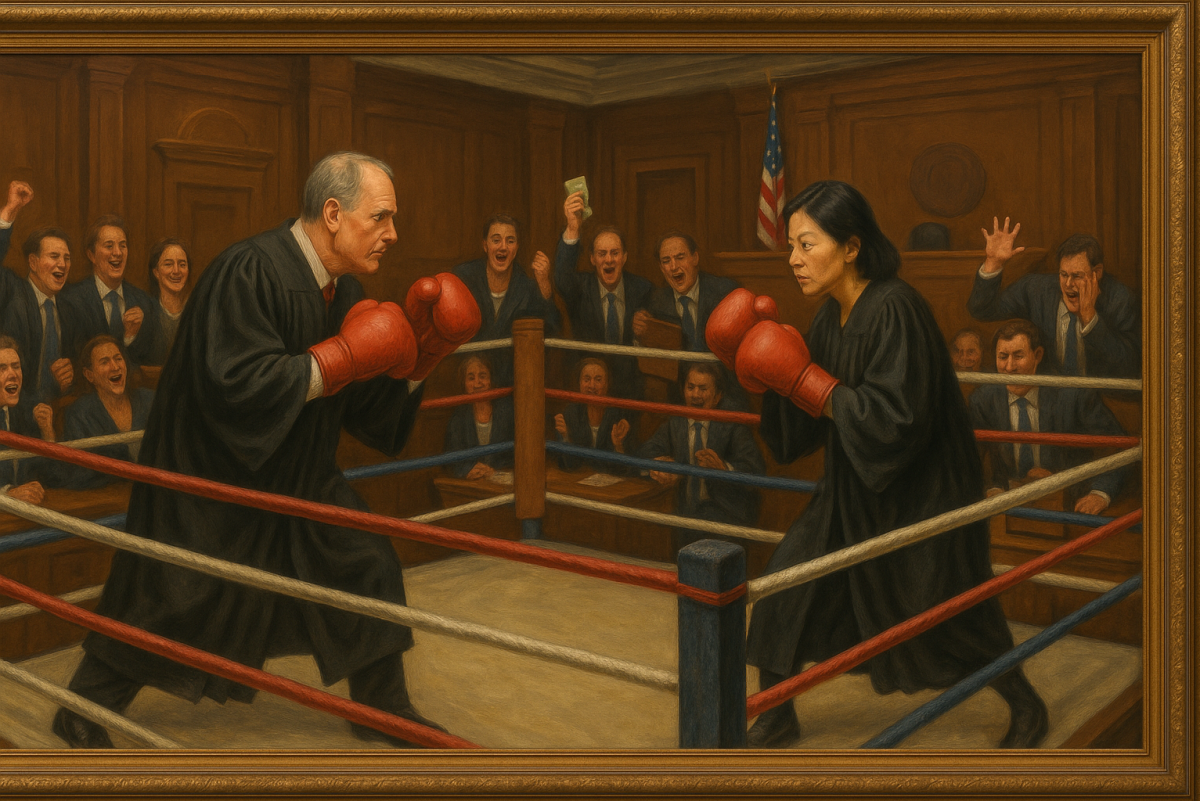
I’ve been quite intrigued by the “Who is the Real John Roberts?” stories over the past couple of weeks. What did his co-clerks think of him? What did he say in memos as a young member of the White House Counsel’s office? The most ridiculous was a Weekly Standard article that discussed the content of his senior thesis at Harvard.
Surely these musings have no point other than to fill the pages of magazines and the minutes of airtime in the doldrums of August. One comes away from these stories decidely convinced that John Roberts is a REALLY smart guy. But, besides that, what can we possible hope to gain from learning what John Roberts thought about the British Liberal party in 1976? Or, for that matter, what he thought about the continued funding of a program during the Reagan administration? The late Judge Richard Arnold, who was almost appointed to the Supreme Court, told me that — at age 13 — he wrote a paper arguing that the Slaughterhouse Cases were wrongly decided. AHA! He lacked respect for settled precedent!
It strikes me that it is sometimes the case that what a person thought twenty or thirty years ago was so formative as to be informative about what they think today. Rick’s previous post on the importance of books that he read in high school suggest that he would apparently be case in point. But, some people change dramatically over time. Many of the leading neo-cons were Red Diaper Babies. And, more to the point, Justice Thomas was a Black Nationalist as a undergraduate. Now, I tend to agree with those scholars — Mark Tushnet, Guy Charles, and Angela Onwuachi-Willig — who argue that Justice Thomas’s opinions do reflect a hint of Black nationalism (or, as Onuachi-Willig more accurately captures, traditional black conservatism). But, I doubt that would give Ted Kennedy any comfort.
Posted by ngarnett on August 8, 2005 at 01:50 PM