
So we’re a week into the second semester of the new school year here at New England Law and I’m re-reading Scott Turow’s One L. I do this every couple years to remind myself what the first-year students are going through. Turow wrote the book in the mid-1970s, which means it ought to be horribly out of date. But it’s not. On the second page of the edition I’m reading, in the Preface, Turow writes that he would be required in his first year to take Contracts, Torts, and Property, Criminal Law and Civil Procedure. And so it is today at my school: those courses comprise the first-year curriculum, plus Constitutional Law. How little things change.
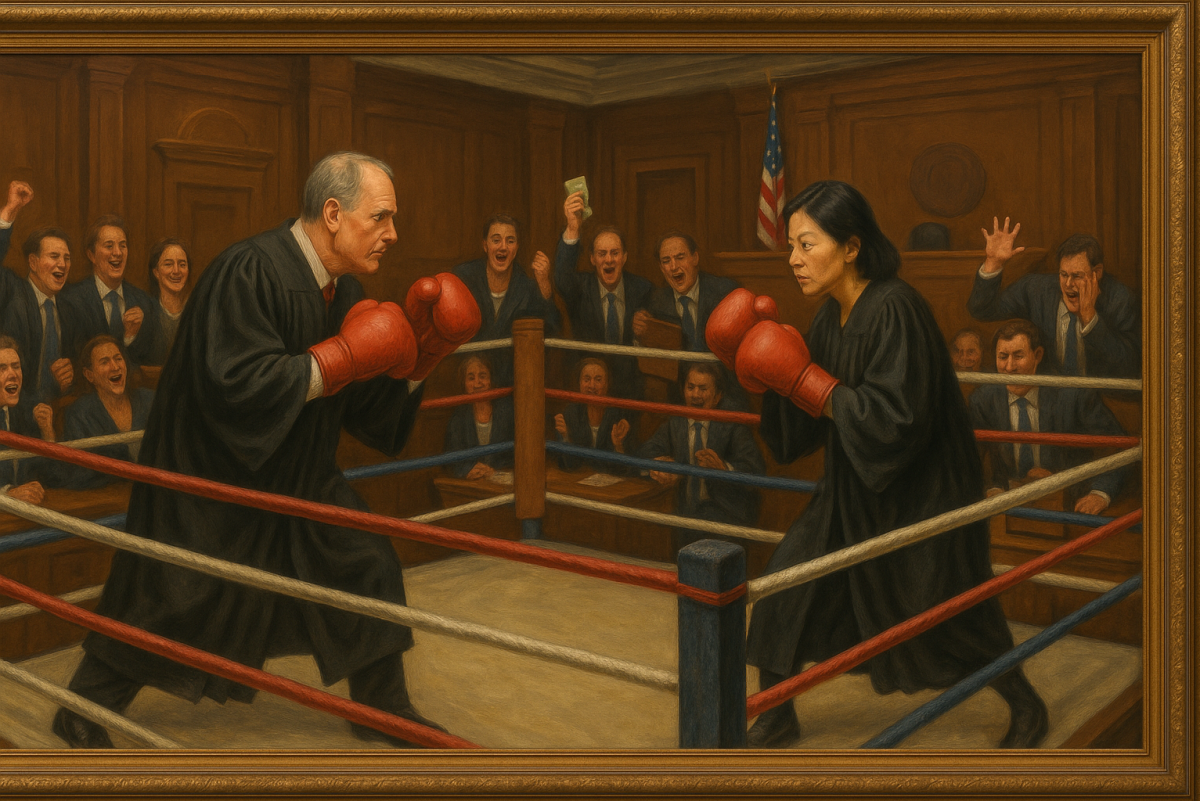
One point of difference between my students and Turow may be the reason for going to law school in the first place. Turow writes that he wanted to “meet his enemy,” which he takes to mean “the fear, the uncertainties, the hope of challenge, triumph, discovery.” I’m not sure this is what motivates my students. When I ask them why they applied to law school, many say they did so because they want to be part of a profession in which they can earn what they believe to be a good living. Some of them say they “always wanted to go to law school.” When I follow up on this, a surprising number explain that they wanted to go to law school because they’ve “always liked to argue.” They are typically undeterred when I point out that most lawyers do not spend their days arguing.
Turow notes, early on in One L, that, in 1974, the Department of Labor estimated there were only 16,500 positions available for the nearly 30,000 law school graduates nationwide. We all know the situation is much worse today. I am a member of the Boston Bar Association’s Task Force on the Future of the Profession, and our research shows that, in Massachusetts alone, there are probably many hundreds of attorneys who are not employed in the practice of law at the moment, and not by their own choice. Recent studies indicate that most states in the nation are over-lawyered, which means that students graduating for the next several years will have a harder time finding that first legal job.
Where will they find work? I looked out at the 98 students in my Civil Procedure class last week and could not help wondering where they would be employed in three years. At New England Law, we are trying to help our students to help themselves by offering programs through which they can enhance their networking skills; we’re also trying to spark an entrepreneurial flame in some, by helping them to think about solo practice as option. There is legal work out there for attorneys, work that might not be reported in the surveys of available openings—serving individuals who are not poor enough to qualify for legal services but need attorneys to write their wills and attend their real estate closings and litigate their small-dollar claims. It is good and honorable work, and at the right price point, a young lawyer could do more than make ends meet.
My fear is that students are too focused on the elusive prize of large law firm salaries, or preoccupied with the desire to spend their days arguing, to appreciate that there are many ways to make a living practicing law, and that they might be able to create a practice path for themselves, and inspire others to do the same.
This is the last post of my guest stint and I want to thank Dan for the opportunity—it was great fun.
Posted by Lawrence Friedman on September 1, 2011 at 12:06 PM
Comments
I was looking at One L the other day, and I have a question. I’m a 3L; I started at Washington and Lee and transferred to Georgetown. I’ve done extremely well at both places, so I may be a bad judge, but it strikes me that law school today is nothing at all like the experience Turow describes; there simply are no intimidating professors or professors who set out to intimidate. Turow describes a Harvard virtually identical to the Harvard of Paper Chase; my law school experience has felt like an extension of college. So, do I (a) have unusually nice professors, am I (b) blind to how intimidating they really are, (c) have teaching styles changed dramatically since the 70s, or (d) are many schools other than W&L and Georgetown still hiring professors who grill and embarrass their students? I tend to assume it’s (c) with maybe a dollop of (b), but I’m really not sure.
Posted by: A Student | Sep 1, 2011 10:04:47 PM
Jim, these are good questions. Here at New England Law, we offer courses in law practice management taught by adjuncts who run their own solo practices, and we also provide mentoring to the students who would like to go out on their own by alums who have done just that.
Posted by: Lawrence Friedman | Sep 1, 2011 3:52:50 PM
I wonder how many law professors themselves have that “entrepneurial flame”? How many have any experience of the challenges facing new law grads trying to set up solo practices?
Posted by: Jim Milles | Sep 1, 2011 3:30:00 PM