
In an earlier Prawfs post, I talked about the holdout in the Jodi Arias case and how the holdout was able to get her vote out of the jury room because she had been “treated” with the Colorado method of capital voir dire.
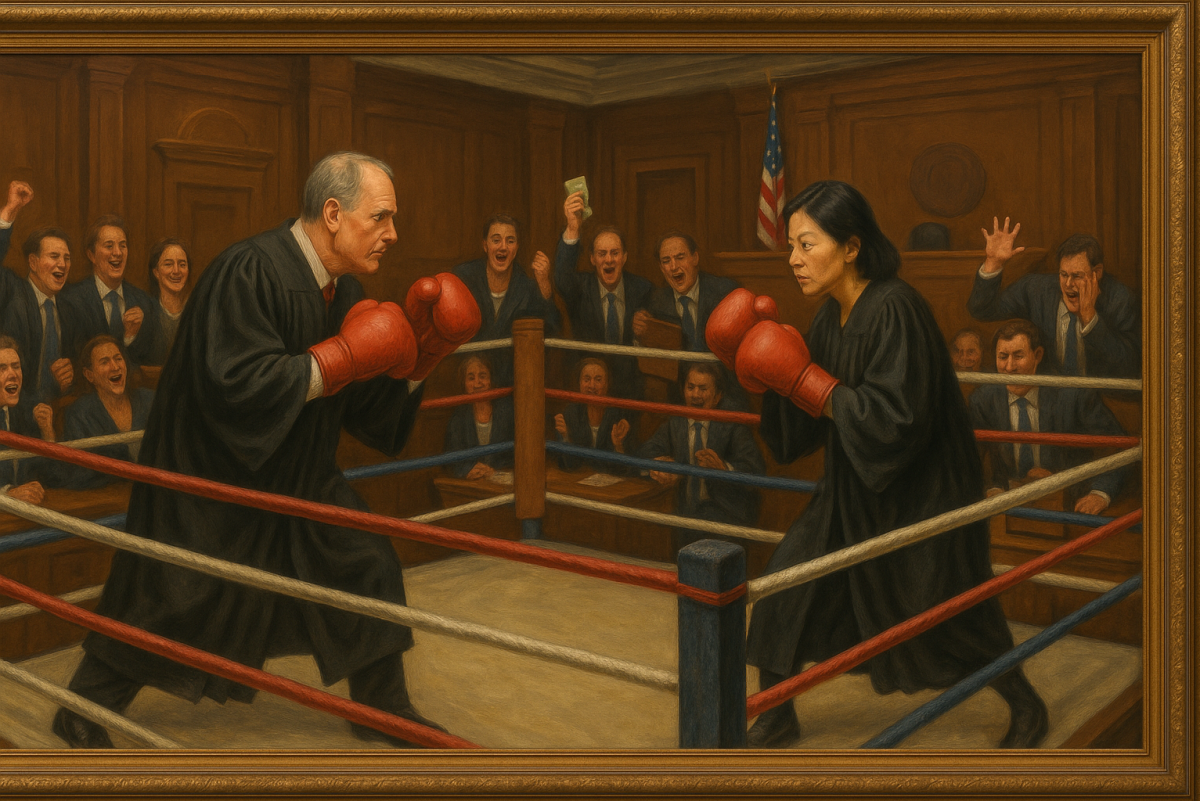
That jury deliberated for five days and when they were released, those who wanted death were pretty vocal about how angry and frustrated they were with the holdout. Compare that angry reaction to the calm reaction by the jurors in the James Holmes trial. This eight-minute clip of Jury 17 describing the jury dynamics is well worth watching. She describes how the jurors were cordial and respectful of each other. When pressed by reporters as to whether tempers flared in the deliberation room, she said tempers didn’t, and that everyone simply recognized that the juror who was voting for life was firm in that position. (Two other jurors were on the fence.)
So why was the Arizona jury so angry and the Colorado jury so calm?
If anything, we should expect the reverse. The Arias case was not that egregious as far as death penalty cases go. Many reasonable people could argue that those types of cases shouldn’t even qualify for the death penalty. And in those types of cases, we might not expect the death-voters to be that committed to ensuring a death verdict gets out of the jury. However, most would agree that if a jurisdiction is going to have the death penalty, the Holmes case would qualify. The death penalty is supposed to be reserved for the worst murderers, and that case appears to be about as bad as it can get. We might expect the death-voters to be deeply committed to getting a death verdict out of the jury.
In both cases, the defense attorneys used the Colorado method of capital voir dire. (This article describes its use in the Holmes case). That method has two main parts: identification and treatment. In the first step, the defense counsel ask a precise question that is designed to accurately and reliably measure whether the potential jury is constitutionally prohibited from serving on a capital jury. The defense counsel then develop a rating for that juror using open-ended questions. Once the juror is identified, the defense counsel move to step two.
In that phase, the defense counsel “treat” all of the favorable jurors (those who are likely to start with the presumption that life is appropriate) with a condition – the defense counsel teach those jurors how to get their votes out of the deliberation room. That happened in both Arizona and Colorado.
The defense counsel also treat the unfavorable jurors (those who are likely to start with the presumption that death is appropriate) with a condition – the defense counsel teach those jurors how to respect the decisions of others. Among other things, the defense counsel explain that the penalty decision is a moral decision and that in most social situations, it is unacceptable to challenge someone’s moral decisions (“You wouldn’t tell someone that they had chosen the wrong religion, would you?”). The defense counsel also have the potential jurors commit to behaving in a professional way and to ensuring that others do the same (“If you see someone raising their voice at someone else, I can count on you to tell them to keep it professional, right?”).
In Colorado, the jury did get this treatment and responded to it. Indeed, even the prosecutor responded. But in the Arias trial, the defense counsel did not have the time in voir dire to do this treatment. The Arias defense counsel were able to treat the presumptive life-voters, though, and that proved enough to get one vote out of the deliberation room.
Posted by Eric Carpenter on November 25, 2015 at 12:30 PM