
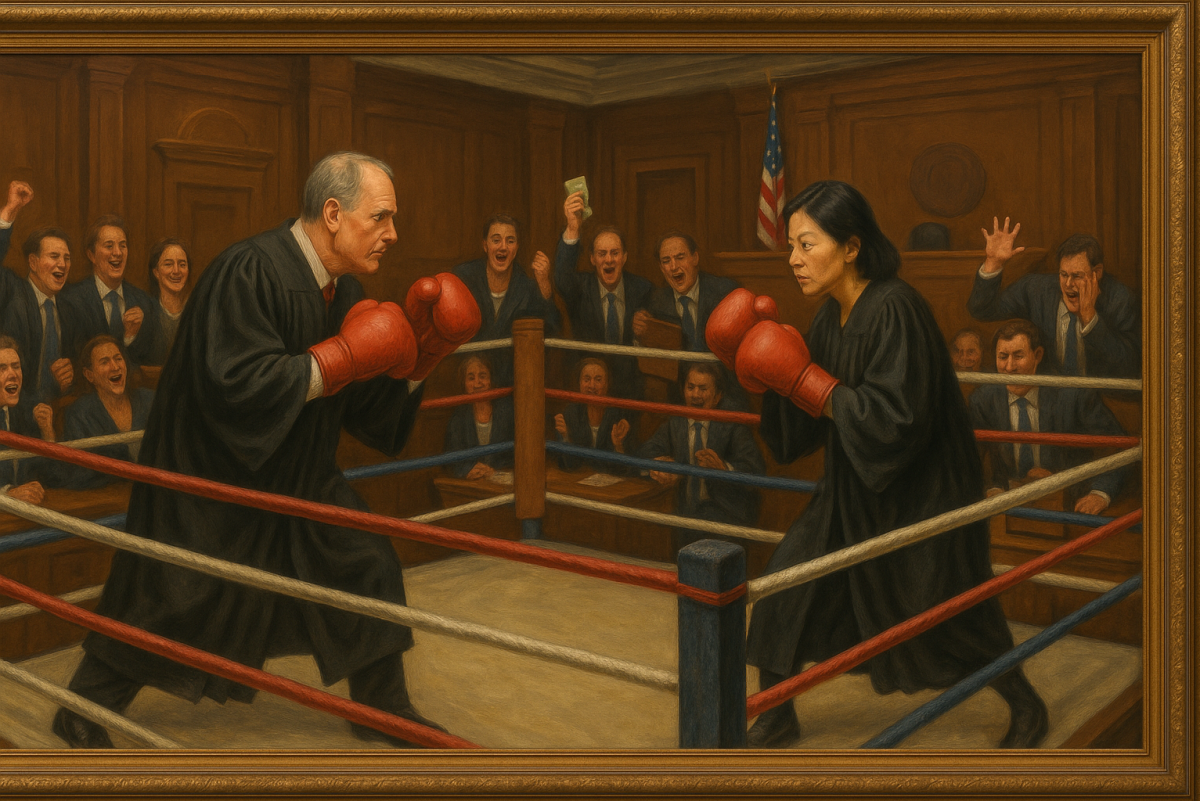
I’ve resumed work on my Youngstown book. One issue that I’m thinking through is a common misperception about what Jackson said in his concurrence.
The misperception goes something like this: Robert Jackson was an aggressive advocate for presidential power as FDR’s Attorney General and supported the executive seizure of private property in the interests of national security. But Justice Jackson switched his position and rejected President Truman’s seizure of the steel mills. In doing so, Jackson recognized that the law was different from his personal view, much as a judge does by affirming on stare decisis grounds a precedent with which she disagrees.
But this is not accurate. Jackson actually said that his views were consistent and that the FDR seizure was distinguishable from the Truman seizure. In other words, he did say that he changed his position. Why, then, do people think that he did? Part of the answer is that said that as a judge he was not bound by his prior statements as Attorney General and alluded at other points to the difference between serving as an executive advisor and as a judge. But he also made other points suggesting he would not have advised Truman to make the seizure if he had been Attorney General in 1952.
Perhaps this was just brilliant rhetoric. But the question I have is whether the perception that Jackson changed his view because of judicial robes is important to the authority of the opinion.
Posted by Gerard Magliocca on April 14, 2023 at 08:12 PM