
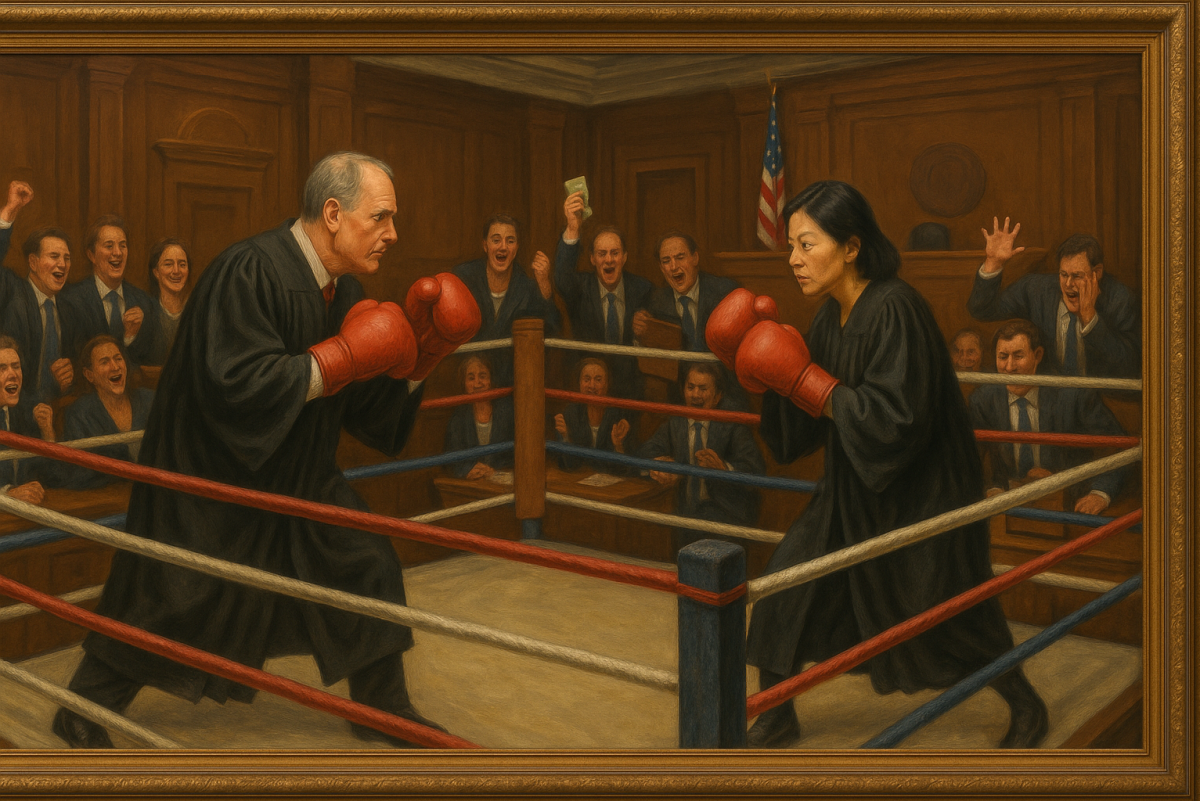
Here is what the three-judge District Court in West Virginia v. Barnette said on that issue. Might be of interest to courts considering Humphrey’s Executor claims.
Ordinarily we would feel constrained to follow an unreversed decision of the Supreme Court of the United States whether we agreed with it or not. It is true that decisions are but evidences of the law and not the law itself; but the decisions of the Supreme Court must be accepted by the lower courts as binding upon them if any orderly administration of justice is to be attained. The developments with respect to the Gobitis case, however, are such that we do not feel that it is incumbent upon us to accept it as binding authority. Of the seven justices now members of the Supreme Court who participated in that decision, four have given public expression to the view that it is unsound, the present Chief Justice in his dissenting opinion rendered therein and three other justices in a special dissenting opinion in Jones v. City of Opelika, 316 U.S. 584, 62 S.Ct. 1231, 1251, 86 L.Ed. 1691. The majority of the court in Jones v. City of Opelika, moreover, thought it worth while to distinguish the decision in the Gobitis case, instead of relying upon it as supporting authority. Under such circumstances and believing, as we do, that the flag salute here required is violative of religious liberty when required of persons holding the religious views of plaintiffs, we feel that we would be recreant to our duty as judges, if through a blind following of a decision which the Supreme Court itself has thus impaired as an authority, we should deny protection to rights which we regard as among the most sacred of those protected by constitutional guaranties.
Posted by Gerard Magliocca on August 4, 2025 at 12:05 PM