
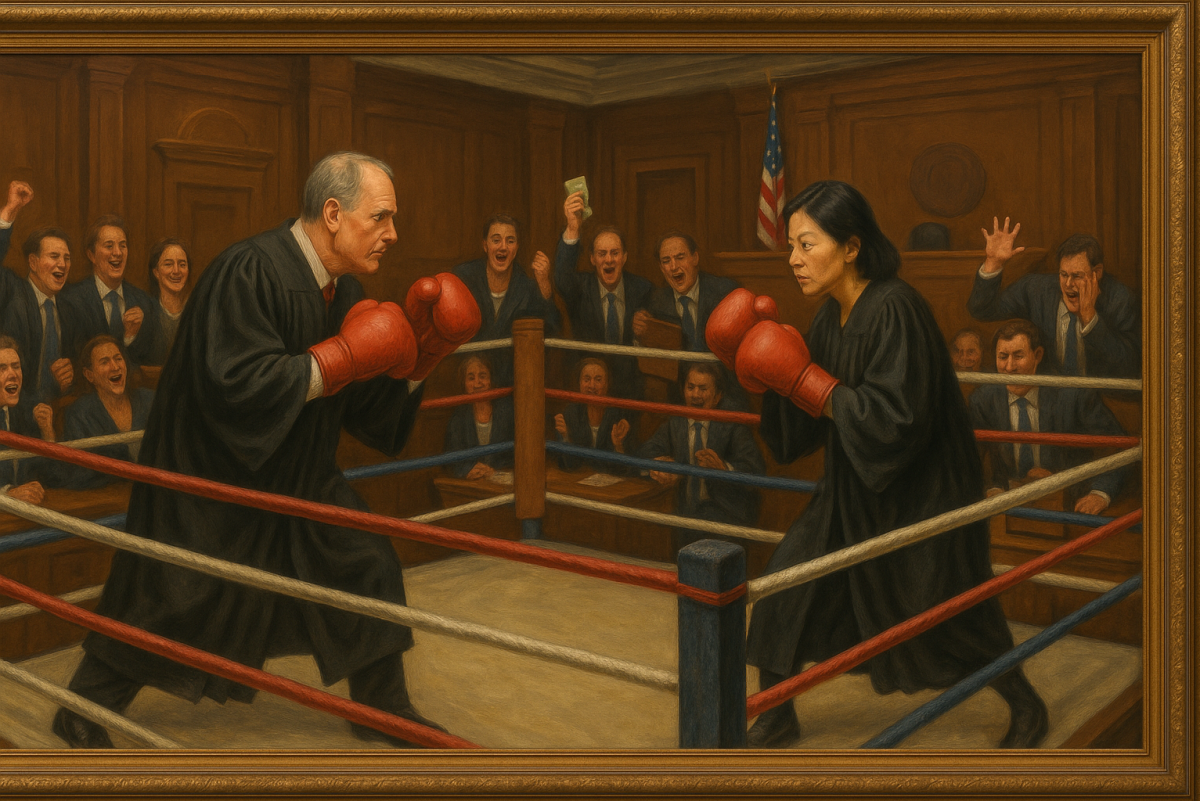
In 2021, my friend and colleague Matthew Mirow and I published Painting Constitutional Law, a book of essays on ten canonical SCOTUS cases that originated in Florida. The book arose from artist Xavier Cortada’s May It Please the Court, a series of paintings providing visual representations of those cases and their legal meaning. We got legal scholars to write essays about the cases and their impressions of the paintings and how they capture the leagl principles and themes. Cortada’s original series include Gideon, Williams v. Florida, Miami Herald v. Tornillo, Proffitt, Palmore, Hialeah, Seminole Tribe, Bush v. Gore, Stop the Beach, and Jardines.
Matthew and I were invited to speak about the book at the Georgia General Assembly Continuing Legal Education Seminar in January. One of the things I want to discuss is what a Georgia-based May It Please the Court would like like–what significant SCOTUS cases originated in Georgia (federal or state court). So far I have thought of: Worcester; Gregg (Proffitt‘s companion case reviving capital punishment); and Heart of Atlanta. I guess we could add Chisholm v. Georgia, which kind of pares with Seminole Tribe around sovereign immunity. On the free speech front, I thought of Forsyth County.
What other “canonical” cases originate in Georgia? Or, if not canonical, significant application of constitutional principles. No comments are open; feel free to email me with thoughts.
Update: An emailer offers Bowers, Darby, McClesky v. Kemp (which pairs with Gregg) and Bostock. There is an interesting theme off Georgia-based cases that are no longer good law: Bowers, Furman v. Georgia (the lead case declaring capital punishment invalid, before Gregg revived it), maybe Bostock (depending on how cynical we want to be and what we think will happen this term).
Update: Another emailer suggests Herndon v. Lowry, an early First Amendment case in which Georgia prosecuted a Black communist labor organizer; the Court overturned the conviction on free speech and procedural grounds.