
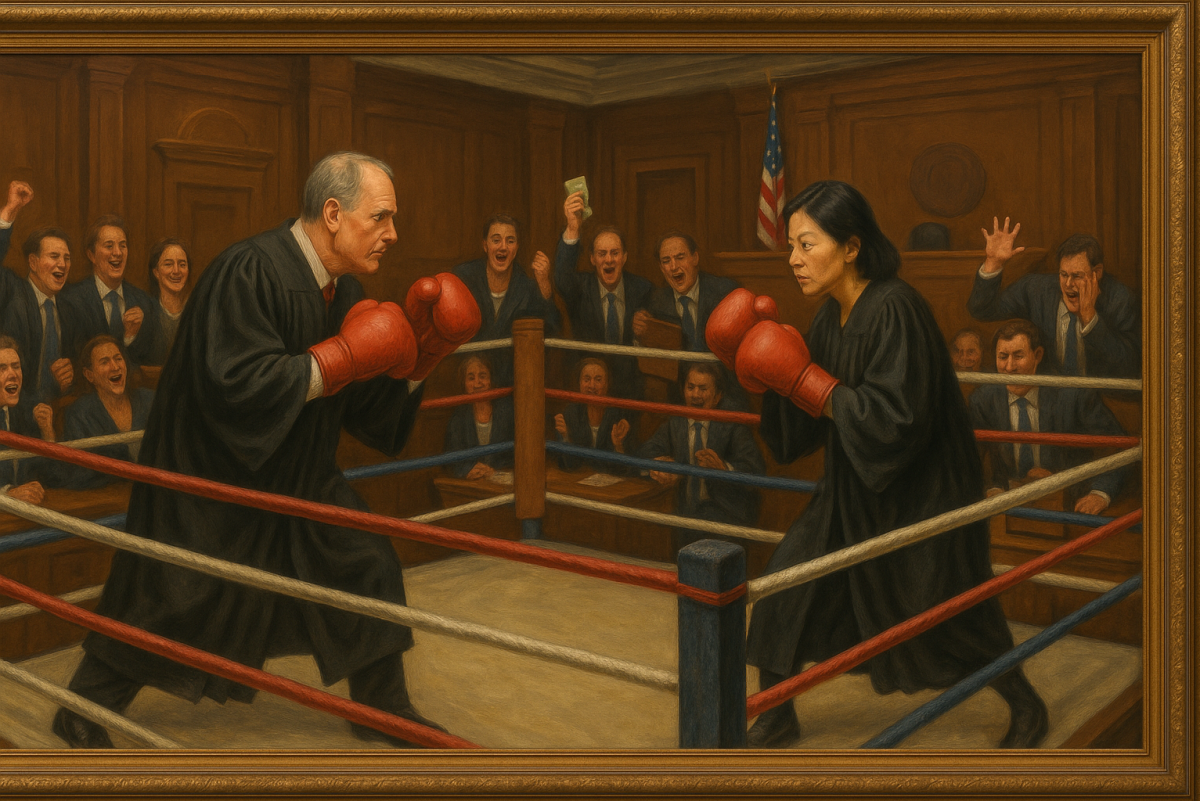
Pam Bondi (and Todd Blanche) went off with the usual juvenile snideness about E.D. Va. judges questioning why Lindsay Halligan’s name continues to appear in filings–“rogue judges,” “fail[ing] to live up to their obligations of impartiality
because of their own political views,” “unconscionable campaign of bias and hostility.” Both are not-very-bright partisan hacks who operate at middle-school level, so the excessive-but-empty rhetoric should not surprise anyone.
While the tone is unjustified, they are not alone. Many–including some ED Va. judges–suggested that the AUSAs acted wrongfully, unethically, or in disregard of a court order. Some non-judge commetatros accuse the administration of playing “Calvinball” (that is getting old, fast–and also this would not be an example of it). They describe Halligan as “cosplaying” as US Attorney. Some judges have spoken of the government ignoring the law of the district as to her appointment.
Government attorneys can get away with a lot on a view of departmentalism I share. But you do not need to be a departmentalist to see what is going on. There are two non-binding opinions declaring the appointment invalid–one from the district and one from another circuit involving a different, factually distinct appointment. An OLC opinion purportedly comes out the other way. On that landscape, it is unfair to accuse the AUSA’s of behaving unethically.
Judges should ask the AUSA’s why the prior judicial opinions are wrong and why the court should not follow judicial precedent. Courts should–if they believe judicial precedent correct–adopt them as the correct understanding of the law. And courts should apply that law to require that Halligan’s name be removed from the paper or some tougher remedy, up to dismissing that present indictment. Once the direction within the district becomes clear, a judge might even ask the AUSA how many more times they plan to lose on this issue or why they continue to make work for the court. But judges would be wrong to suggest further wrongdoing on the government’s part.
Departmentalism devolves into supremacy as soon as Court II adopts the precedent of Court I and binds the executive to judicial precedent. But it creates work and messiness leading to that point. Recognizing departmentalist reality, therefore, should change how we speak about ongoing cases. One district-court opinion did not remove Lindsay Halligan from office or turn her into someone playing government dress-up. No one–especially judges–should suggest otherwise.