
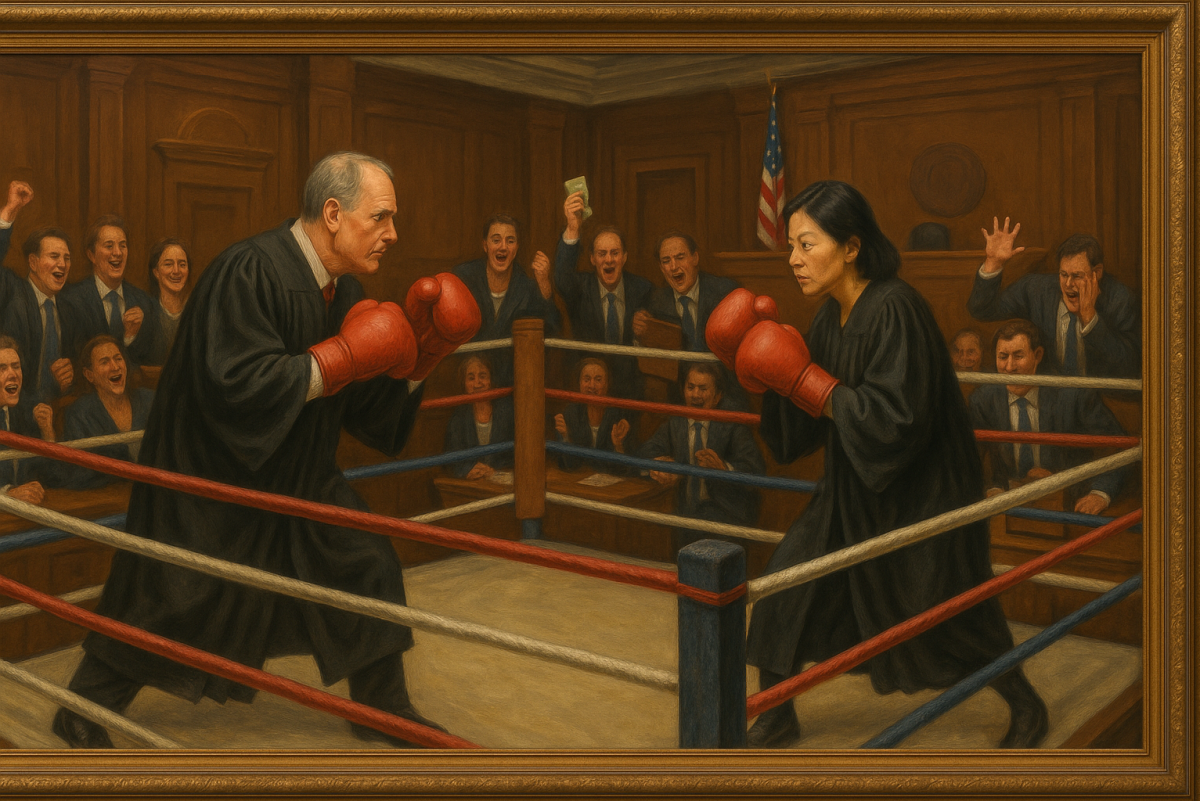
While reading the Holmes Devise volume on the White Court (1910-1921), I learned for the first time about the machinations behind Holland.
Chief Justice White was really fond of birds and utterly convinced that Congress had the power to protect them. (You can probably guess where this is heading.) When the Act of Congress protecting migratory birds was before the Court, the Justices were initially divided 3-3 (3 Justices were ill or absent).
The Chief Justice then asked the Supreme Court Librarian to conduct additional research on the subject, and the Librarian concluded that the Act was invalid. As far as I know, this is the only time that the Librarian was asked for or provided a legal conclusion to anyone on the Court.
Undaunted, the Chief Justice then came up with the idea that a treaty could be made with Canada to protect these birds. He talked with some Senators about this. There was one problem. The case challenging the Act would presumably be decided once the ill Justices returned and before the Treaty was ratified. So the Chief Justice delayed the second argument until the treaty was ratified. (World War I broke out, which gave him the excuse that he needed.) That case was then dismissed, and Missouri v. Holland came to the Court. The Act was upheld, in an opinion by Holmes, relying in large part on the treaty.
Alex Bickel wrote this account. I don’t love his scholarship, but he had a great line summing up this episode:
“Everyone who has power is likely at one time or another to find some cause that seems greater than the restraints he normally acknowledges, and it can turn out to be something like human neutrality in the war among the birds, the insects, and the trees.”