
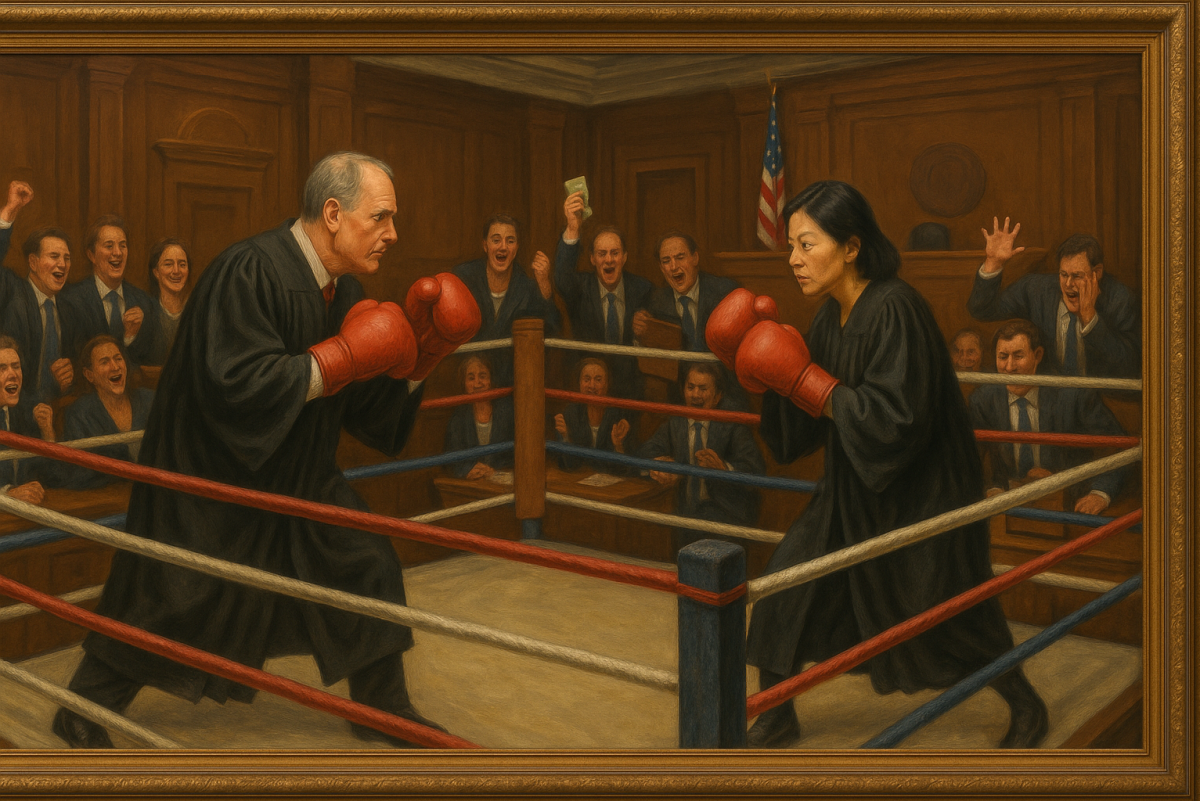
The Manhattan Institute is pushing a proposal to redefine minor crimes–vandalism, destruction of property, trespassing, blocking traffic, etc.–as “civil terrorism” when they occur as part of collective protest activity.
The First Amendment protects peaceful assembly, speech, and protest. It does not prohibit enforcement of restrictions on conduct–destroying property or entering and remaining on property without permission–even where that conduct has an expressive component or is done for expressive purposes. Such laws typically survive intermediate scrutiny. Jenny Carroll challenged this framework, arguing that the First Amendment should limit (through something like jury nullification) the application of non-speech laws around expressive activity.
The Manhattan Institute’s proposal goes to the opposite extreme–enhancing the nature of the crime (from misdemeanor to felony) and the punishment (prison sentence) when expressive or politically motivated conduct violates non-speech laws. The law would be facially viewpoint- and content-neutral. It enhances punishment regardless of the substance of the protest at which the violations occurred–although with an overwhelming likelihood of content- and viewpoint-discriminatory application.
The First Amendment argument would be that the law targets expressive activity more harshly than identical non-expressive activity that implicates identical government concerns. Blocking the highway is a misdemeanor punishable by a fine; blocking the highway to protest an ICE facility is a felony punishable by 18 months in prison. The additional jail time punishes the underlying speech and protest. Marty Redish describes this as a “gratuitous restriction of speech.”
Unfortunately, critics of hate-crime laws pushed this basic argument–“murder is murder and imposing an extra five years in prison for a racist-motivated murder punishes the racist beliefs and ideas not the murder”–and failed. In fact, the “mind” behind this proposal justifies the laws in terms similar to those hate-crimes advocates employ: mass commission of minor crimes in the context of protest activity intimidates and coerces the population.