
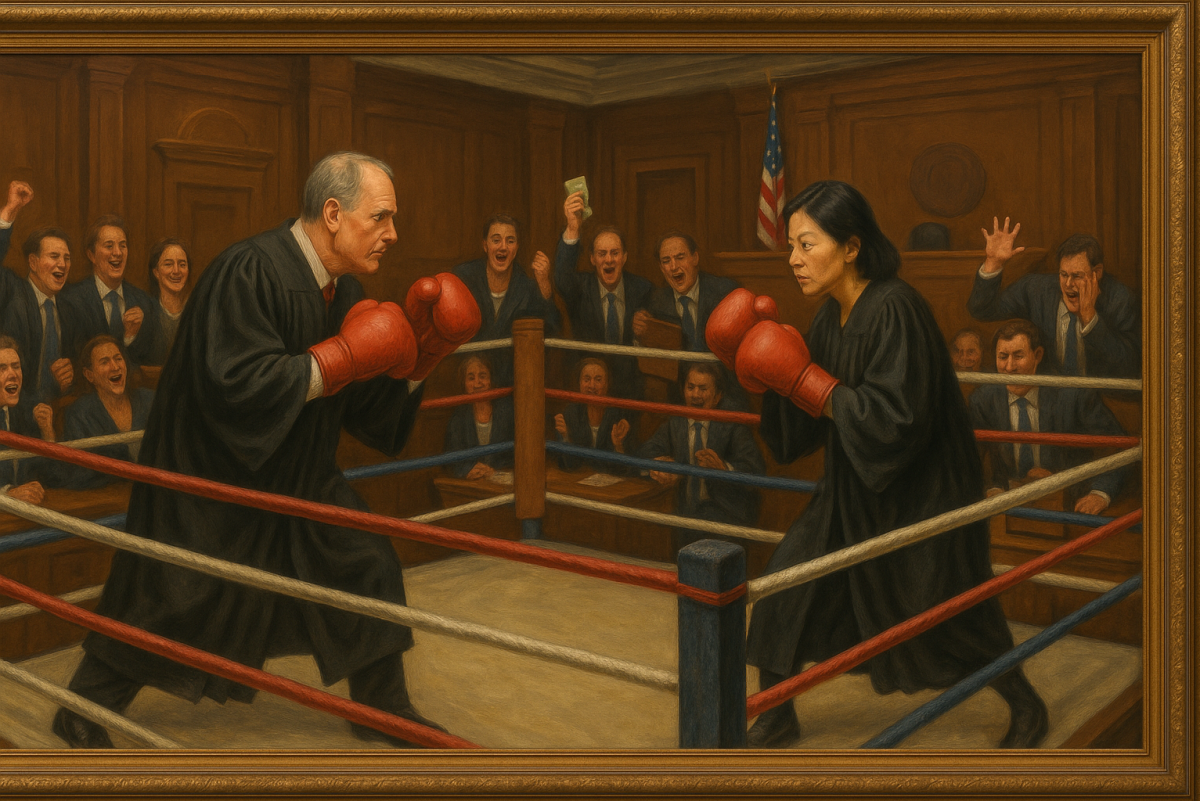
Reports are swirling that federal prosecutors are attempting to indict James Comey. While the precise details are unclear, it appears that the potential criminal charges are related to Congressional testimony that Comey gave in September 2020 and allegations that the testimony was false.
Much of the reporting on the potential charges focuses on President Trump’s grievances against Comey and his personal involvement in the decision to prosecute. But there are other issues—legal issues—that a Comey indictment raises.
One such issue is whether charges against Comey are supported by probable cause. According to media reports, federal prosecutors sent a detailed memo explaining that probable cause does not exist to Lindsey Halligan, the new U.S. attorney for the Eastern District of Virginia. Probable cause is the amount of evidence necessary to bring criminal charges—both as a matter of constitutional law and as a matter of legal ethics. Despite this memo, the media is reporting that Halligan intends to present the case to a grand jury in the hopes of securing an indictment.
Another looming legal issue is the extent to which these threatened charges are an example of a broader, structural problem in American criminal law—unchecked prosecutorial discretion. As I wrote for PrawfsBlawg more than two years ago:
[P]rosecutorial discretion sits uneasily with our commitment to the principle of equal treatment under the law. As a country, we have enacted broadly written criminal statutes, which delegate enormous enforcement authority to prosecutors. And we have not created any mechanisms to provide transparency into how that authority is exercised. We know that prosecutors routinely decline to bring charges when they have probable cause that a crime has been committed, and yet we do not know much of anything about how they use that power.
I wrote those words when Manhattan DA Alvin Bragg secured an indictment of Donald Trump for the Stormy Daniels payments, noting that: “The indictment of a former president (and current candidate for the office) was always going to be a political firestorm. But our failure to grapple with the black box of prosecutorial discretion only adds fuel to the fire.”
Unfortunately, nothing has changed.
