
Dept. of State v. AIDS Vaccine Advocacy Coalition stayed a lower-court injunction and allowed the Trump Administration to impound $ 4 million in foreign aid. The Court threw insisted that “[t]his order should not be read as a final determination on the merits. The relief granted by the Court today reflects our preliminary view, consistent with the standards for interim relief.” This is the latest in a string of 6-3 orders staying injunctions and allowing the Trump Administration to pursue actions pendent lite (firing federal employees, suspending grants, etc.) that cannot meaningfully be unwound if the Court resolves the merits the other way.
Shadow-docket critics use this to argue against the unexplained back-of-the-napkin merits guesses that seem to drive the Court on these orders. But I want to propose a half-baked theory–these cases reflect the Court’s particular vision of its role.
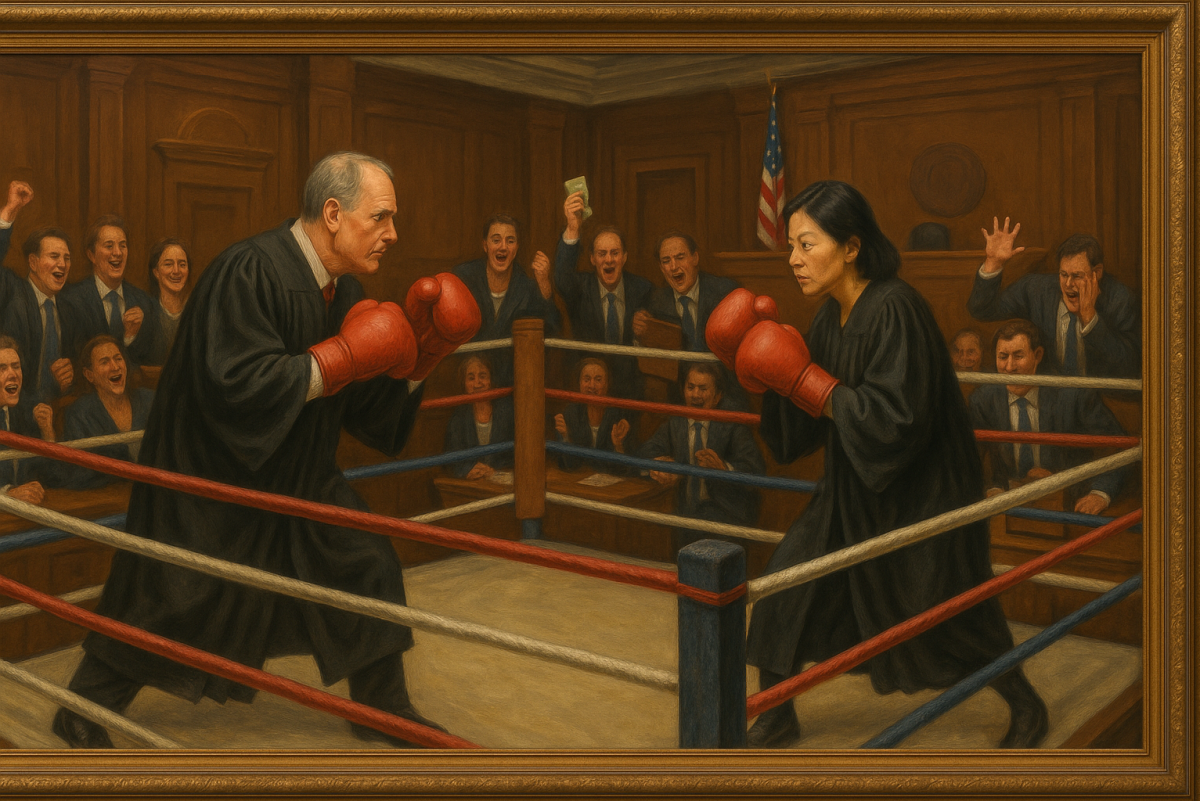
Two models of the judicial role compete for supremacy. Under the dispute resolution model, the judicial power to declare law is incidental to and an unavoidable consequence of resolving a discrete dispute between identifiable parties. Under the law declaration model, the judicial (especially SCOTUS) exercises a distinct role in declaring and explicating legal norms, beyond individual controversies.
CASA‘s rejection of universal injunction reflects the triumph of the former over the latter. A non-universal injunction–providing complete relief to the parties–satisfies the court’s duty to resolve the current dispute between those parties. The court need not (and should not) declare the law or determine the rights for anyone outside the litigation; that awaits future litigation. Justice Barrett’s majority ridiculed Jackson’s law-declaring approach, in which the fundamental role of courts is to “’order everyone (including the Executive) to follow the law—full stop.'”
But orders such as AIDS–by the same 6-Justice majority–might reflect the opposite. The Court says, in essence:
We will eventually decide whether the executive can impound funds or fire members of the FTC without cause” and that pronouncement will resolve the constitutional issues of presidential power. It is true that these plaintiffs will not get their money or their jobs back. But our job is to resolve the ultimate constitutional issue at some point, regardless of the practical remedy for those involved in this case.
In other words, courts declare the law eventually and that will resolve the discussion. The effects on the concrete dispute are secondary to that.
I am not sure this is sufficiently thought out to include in my forthcoming paper on CASA. But it does show, despite the rhetoric, inconsistency in the Court’s vision of its place in the constitutional system.