
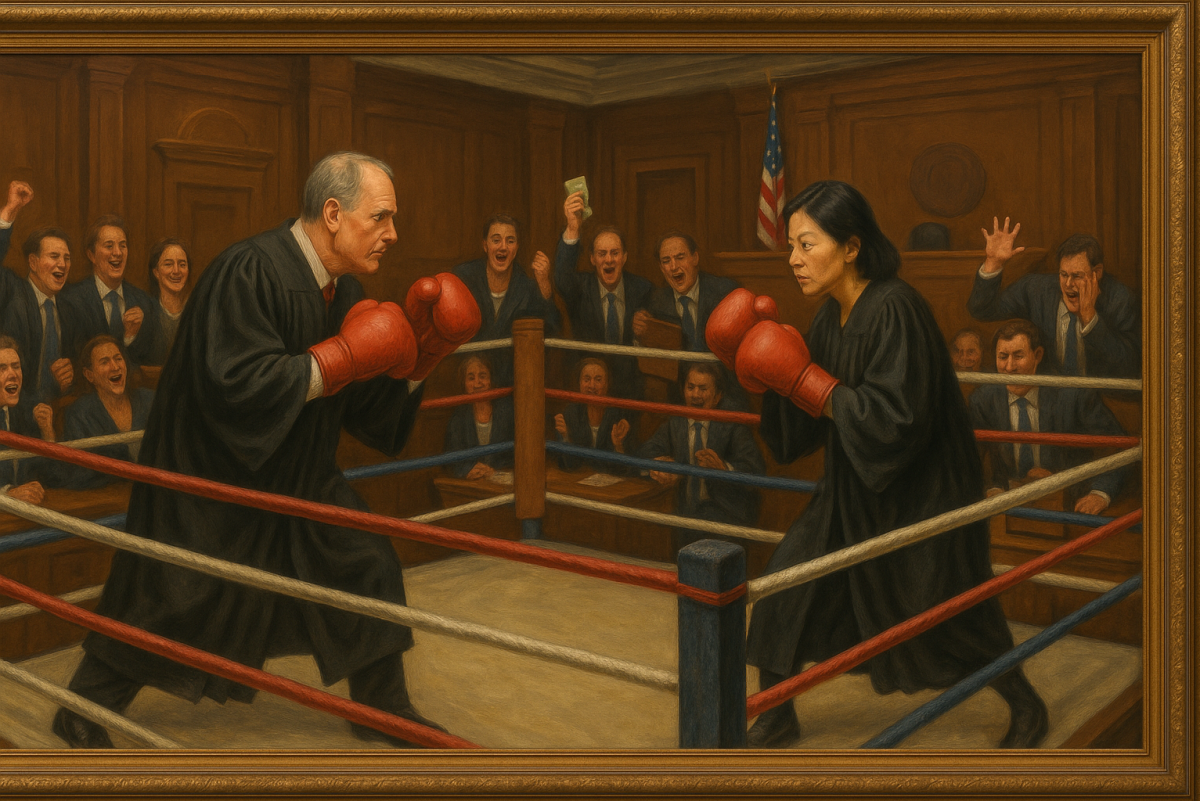
According to this decision last week, the answer may be “yes”—at least for administrative law judges who decide cases for the SEC. That is because a federal judge in Atlanta found that ALJs are “inferior officers” under the Constitution, who under Article II, must be appointed by the President, the Judiciary, or “heads of departments.” (SEC ALJs are instead appointed by a chief ALJ).
As Kent Barnett argued last week, and whose excellent paper on the subject is cited in the opinion, there’s an easy fix for the SEC because the SEC is already considered a “department” and has authority to appoint ALJs itself. But the opinion raises new concerns for other ALJs in the administrative state, who together hear over 250,000 cases a year. That’s because many agencies are not freestanding departments–like the Consumer Financial Protection Bureau, which operates inside of the Federal Reserve. Two more thoughts after the jump.
First, it’s interesting to see how the SEC has become a dramatic example of the tension between the Appointment Clause and the need for agencies to provide an “impartial tribunal.” For those who appear in agency hearings, the Appointment Clause may require department-heads of a law-enforcement agency to appoint administrative law judges themselves. But by forcing the SEC to directly appoint ALJs, the Court (somewhat) weakens structural protections long considered necessary to make administrative proceedings more independent by isolating agency adjudicators from staff involved in the investigation or prosecution of a case.[1] Notably, the decision comes just as judges and commentators, like Judge Rakoff, Joseph Grundfest and the defense bar, argue that the SEC enjoys a “home court” advantage in its own administrative proceedings. This is one part of the “quandary” that Kent addresses in his fine article. Kent H. Barnett, Resolving the ALJ Quandary, 66 Vand. L. Rev. 797 (2013).
Second, the court dismissed the defendant’s argument that administrative law judges, who cannot be fired without “good cause,” threaten the President’s power to supervise and “remove” officers under Article II. The Supreme Court
Comments
thanks for the nice sharing
Posted by: Lawson Law | Feb 19, 2017 8:30:31 AM