
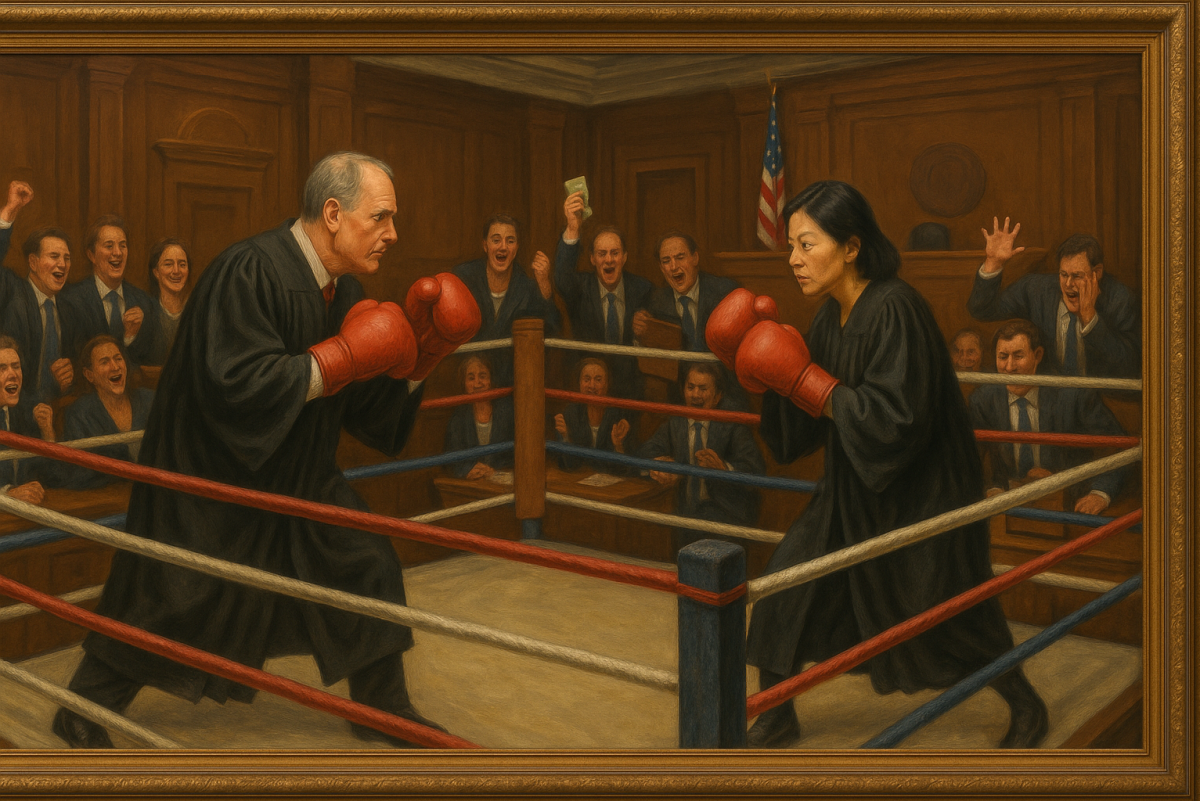
So said the Court
Comments
Thank you for sharing this informative blog. I love reading your blogs, it provides such important information.
Posted by: Vheideknecht | Apr 3, 2020 7:22:47 AM
Drew, as someone else posted above, 28 USC 1498 would require the federal government to pay compensation if it produced a patented vaccine. But the decision (or, more precisely, the Florida Prepaid decision) probably does mean that Cuomo could get NY state to start producing a patented vaccine if one were to be found. Though patent law is the least of our problems right now because, if a vaccine is found, it would probably take well more than a year for the patent office to issue a patent on it, and until the patent issues everyone could use the vaccine without infringement.
Posted by: TJ | Mar 25, 2020 2:37:56 AM
Drew: Patents are not copyrights. And there is a specific federal statute dealing with the federal government infringing patents. 28 U.S.C. § 1498.
Posted by: John | Mar 24, 2020 4:36:38 PM
Does this mean that the government could produce its own Covid-19 vaccine even if some company has patented it?
Posted by: Drew McCormick | Mar 24, 2020 2:17:32 AM
I don’t think I agree about what it means to concur vs. concur in the judgment. At the Court, at least, Justices writing separate opinions generally “concur” in full, as opposed to in part or not in part and solely in the judgment, when they join the majority opinion in full but wish to explain why they join or add some extra thought not contained in the opinion (or to purport to explain the opinion, etc.). Thomas can’t join some of that opinion, so he concurs only in part with it. It doesn’t matter, under their conventions, that the parts he’s joining are arguably dicta. That said, even on your definition of what it means to concur, I’m not really sure if the Court’s path to giving Florida Prepaid stare decisis effect isn’t a part of the opinion that led to the judgment. The majority, as I understand it, just thinks there’s a lack of special justification for departing from Florida Prepaid, and, on the basis of the principle that there must be, applies it; Thomas applies Florida Prepaid because he thinks the petitioner hasn’t demonstrated it’s wrong, which is perhaps just north of him being barely convinced it is wrong. I don’t follow why the majority’s deployment of its understanding of stare decisis to follow Florida Prepaid isn’t a part of the opinion that led to the judgment. For all one can tell, but for a strong view of stare decisis the majority, or at least some of its members, would come out differently.
Posted by: Asher Steinberg | Mar 23, 2020 6:41:33 PM