
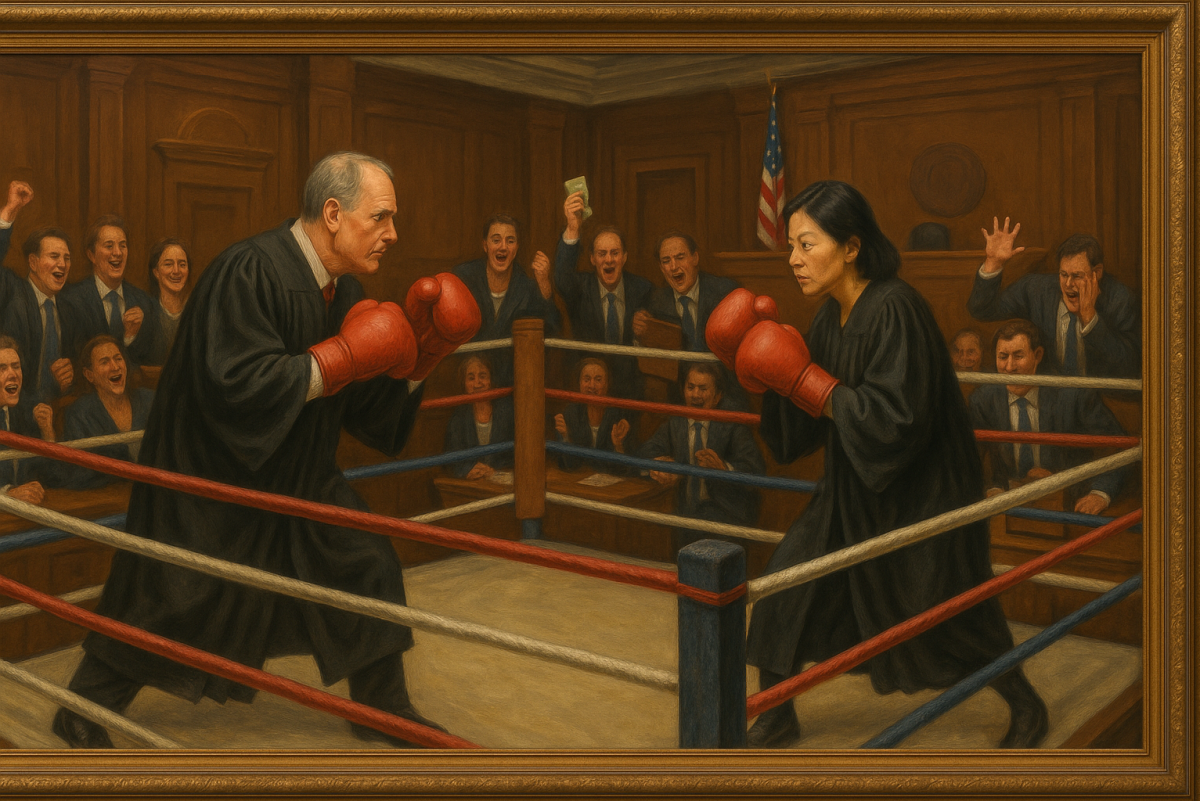
One reason I’m researching the Bayh Subcommittee is that this was an era where Congress dominated constitutional discourse. Each branch takes its turn as the constitutional engine. Today you’d have to say that the Presidency is on the leading edge (for better or worse). In the 1960s and 1970s, though, Congress was first among equals, especially when you combine the constitutional amendments proposed with the landmark statutes enacted and with the Watergate inquiry.
Why was Congress the leader then? First, the Presidency was more focused on foreign affairs (the Cold War and Vietnam). Second, Watergate weakened the executive branch and gave Congress a boost. Third, Birch Bayh was in the Senate. Fourth, Warren Burger was no Earl Warren.
Why did this change? In 1980, President Reagan was elected with a distinctive constitutional vision. He seasoned the Justice Department with lawyers like John Roberts, Ed Meese, and Steve Calabresi to carry that vision forward. But another key development in 1980 was that Birch Bayh lost his Senate seat.
Here I want to make a sports analogy that Howard will love. Sometimes a team is in a golden age. The Chicago Bulls in the 1990s. The Indianapolis Colts for a decade or so. Why? Because of one star player. Sure, other people were involved, but without the star the team would be just good. Sometimes the same is true in politics. The personality of the President matters. And there are key figures in Congress. Birch Bayh was that person in his era when it came to constitutional reform. Once he left, the energy was gone. Congress has proposed no constitutional amendments to the states since.
Tomorrow I’ll start discussing a more controversial theme of my project, which is that the Warren Court is a poor way of describing the constitution of the 1960s.
Posted by Gerard Magliocca on July 9, 2025 at 07:57 AM