
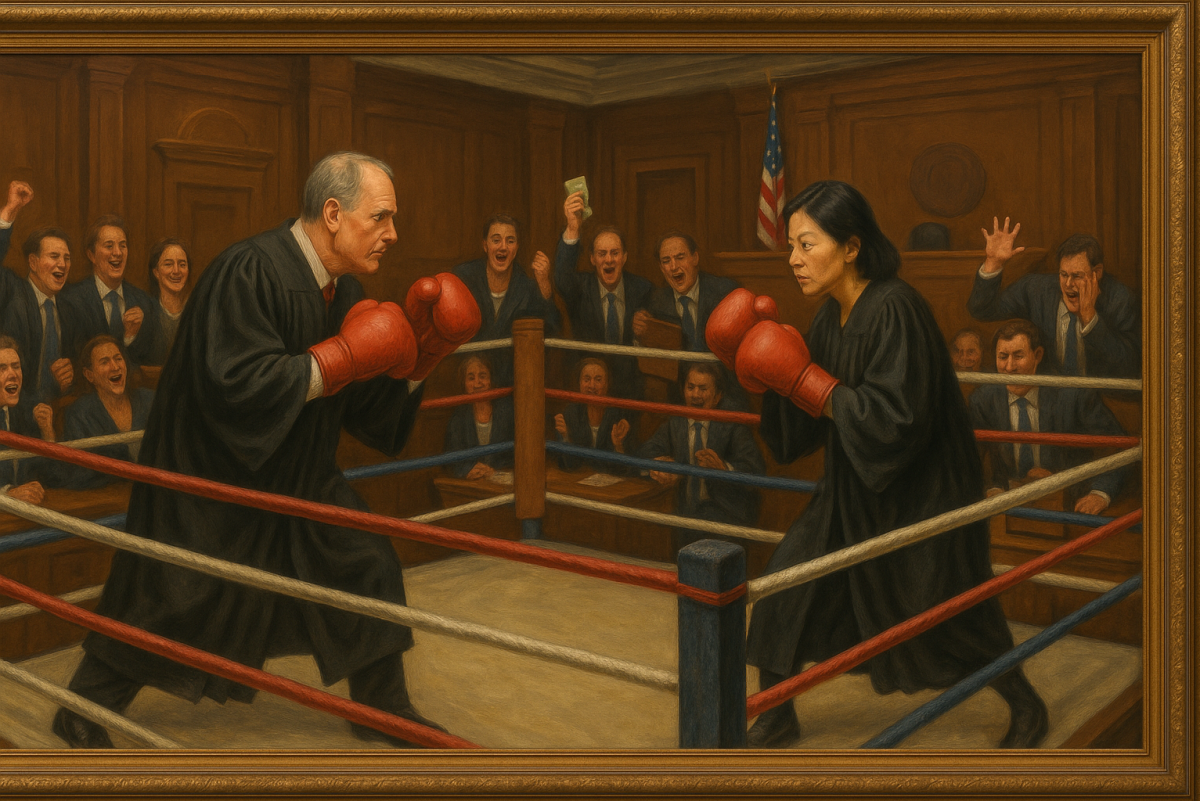
Duncan Hosie (Fellow at Stanford) makes some interesting points in The Atlantic about Callais‘s future consequences and what it means for future voting legislation
Two questions for me:
1) Is Callais a constitutional decision or a statutory decision. On one hand, the Court focused on the proper interpretation of the VRA. On the other hand, the proper interpretation was driven by constitutional concerns about the scope of § 2 of the Fifteenth Amendment, which empowers Congress to prohibit only intentional discrimination in voting and nothing too far beyond. The Court’s holding appears to be that the Louisiana map violated the Fourteenth Amendment because the state did not have a compelling interest in using this map because the VRA did not require or even permit it. Justice Alito took that position in his pissy response to Justice Jackson about rushing the mandate. This question–is this a constitutional or statutory decision–relates to an article I want to begin this summer.
2) Hosie’s piece argues that the § 2 discussion an applying City of Boerne congruence-and-proportionality to the Fifteenth Amendment gives Callais its greatest future force. Going forward, Congress cannot read the Fifteenth Amendment to prohibit something other than blatantly intentional race discrimination and it cannot enact an amended VRA that less closely hews to that constitutional meaning.
Niko Bowie agrees with the premise but offers a “friendly amendment“: “Congress does not need this majority’s approval to check the Court’s power and respond anyway.”
That friendly amendment reflects that we live under a regime of judicial departmentalism rather than judicial supremacy, despite the Court’s rhetoric. A Democratic Congress and President could enact and attempt to enforce a new VRA precluding disparate impact. It would not violate Callais or any existing judgment; it would not be grounds for a good-faith argument about Congress or the President “ignoring” or “disregarding” the Court. Not that the Justices and Republicans will not make those arguments; just that they should not be taken seriously.
Of course, the lower courts and eventually SCOTUS will declare that new law invalid and enjoin its enforcement–that is the “judicial” in judicial departmentalism. And Congress can go back and try again. I think we would better off, at least rhetorically, if we accepted the reality of this process, rather than speaking in inaccurate judicial-supremacy terms. And perhaps these is a benefit to forcing the Court to expend political capital in repeatedly declaring invalid broadly popular laws. A combination of popular pressure (and/or eventual change of personnel) perhaps prompts the Court to back off and alter its constitutional approach.