
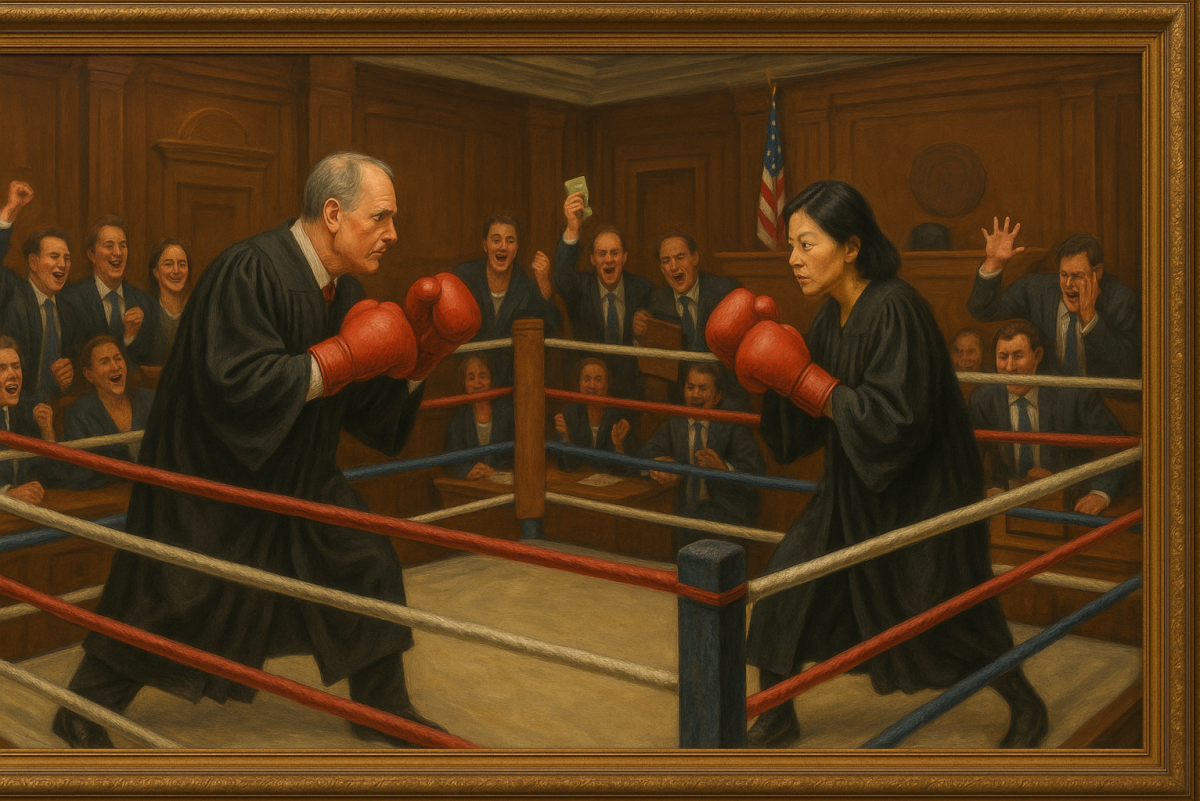
Judge Novak (E.D. Va.) issued to Lindsey Halligan an order to show cause why she continues to identify herself as U.S. Attorney for the Eastern District, why her name should not be struck from a pending indictment, and why she should not be sanctioned. The linchpin of Novak’s analysis is Judge Currie’s “bdining court order” and opinion finding her appointment improper; that appealed-but-unstayed order “remains the binding precedent in this district and is not subject to being ignored.”
What I said when E.D.Va. judges began questioning this remains true: There is no such thing as “binding precedent in this district” because the opinion of one district judge does not bind another judge in that district. Currie’s order is “binding” only in the action in which it issued. Novak could have achieved this result with slightly different language–“Judge Currie ruled that Halligan was not properly appointed; this court believes that (non-binding) conclusion correct; and Halligan must show cause why this court should not adopt that conclusion, rule her appointment improper, and order her name struck from pleadings in this case.” That would use Currie’s opinion properly–as persuasive authority–while establishing law and a binding opinion in the current action.
This may seem pedantic since we land in the same place. But the process matters. Trump and his minions are doing a lot of unlawful-or-just-bad stuff, and lower courts are under pressure to stop it. But courts do not further their cause by overstating or misstating the law and thus the nature of the Administration misdeeds.