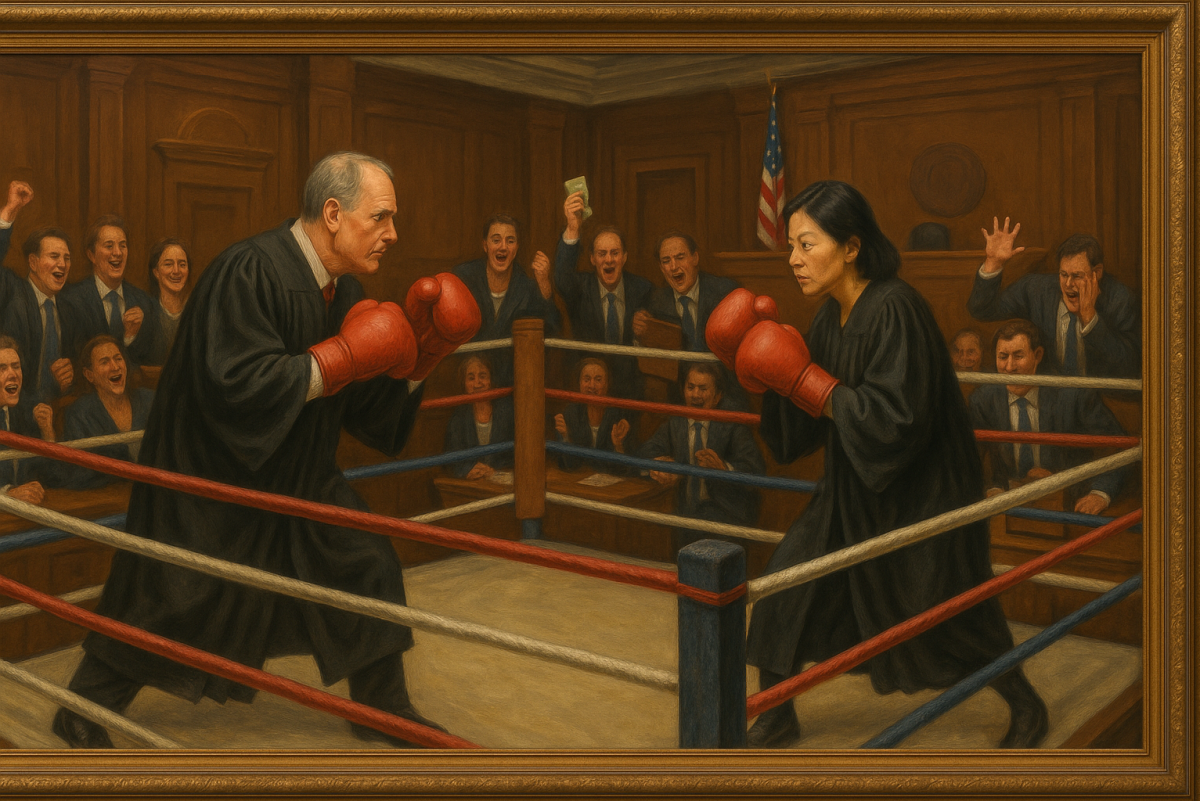
Time to Focus Attention

FOP Stuart Buck has an important post entitled While We Were Distracted up about Darfur. Why is Michael Jackson’s trial receiving endlessly more attention than the wholesale slaughter of innocents in Africa? One of the comments there raises an interesting question about where the Europeans are on this issue, since the US is currently underwriting the Iraq reconstruction in large measure. I think this misses the point, in several dimensions. First, while there are limits to American governmental resources, we’ve barely begun to exhaust them in light of the social wealth available in this country. There can be no question that American involvement in Darfur is feasibly compatible with our excursions in Iraq and Afghanistan. It might mean slightly higher taxes, it might mean fewer agricultural subsidies to sugar cane farmers in the US.

Second, the issue is less what is the US gov’t doing right now than what are the media and the People of these Several States doing in focusing (or misdirecting) attention on the unfolding tragedy. At some level, the story of Darfur needs to be told so that the images of wretched and mangled children are seared on our collective conscience. That’s not happened yet.

Go to savedarfur.org and do something. Give money. Talk to your friends and colleagues. Change the focus. Now.

Update: Stuart tells me that the post he has comes from the Coalition for Darfur.

Posted by Administrators on April 21, 2005 at 08:59 AM

More die of heartbreak

Another problem in expressive politics. An Illinois high school has battling t-shirt-wearing alliances. Students supporting the gay-straight alliance wear “gay? fine by me.” Some of their opponents meanwhile, inspired by the Good Book, don garb stating “Crimes committed against God.”

Jacques Jacobs, youth pastor at Family Harvest Church in Orland Park, seized the opportunity to oppose the movement this year and gave away shirts with “Crimes committed against God” slogan to students. ‘Many people feel that the most discriminated group of all is the Christian student in the public high school,’ Jacobs said.’

Homewood-Flossmoor High School spokesman David Thieman said administrators allowed the students to wear shirts promoting and opposing gays on the same day. He said no disruptions were reported to the administration. “It was a normal day,” he said. “Business as usual.”

But organizer Myka Held said she reported two boys for taunting her by saying “gays would burn in hell.” She said her dean made one boy apologize and promised to speak with the second boy today. Students also claimed teachers were reprimanded for distributing shirts with Christian messages.

If I recall, my Fried con law issue-spotter exam question involved issues of t-shirts at schools. Uniforms anyone?

Shtreimel tip: Romanesko

Posted by Administrators on April 20, 2005 at 11:11 PM

Comments

One option for the school would be to ban print t-shirts all together. See Blau v. Fort Thomas Public School District, 401 F.3d 381 (CA6 2005)(Sutton, J.)(upholding a dress code that banned “tops with writing on them and ‘logos larger than the size of a “quarter” . . . except “Highlands”[the school] logos or other “Highlands Spirit Wear”‘”).

Posted by: dan levine | Apr 21, 2005 11:21:36 AM

Google + CraigsList = Croogle?

Vic Fleischer (UCLA Law) has resuscitated A Taxing Blog, a blog on tax and business law and policy, which I admit is not really my cup of tea. Still, Vic’s a zippy writer with a sharp eye. And one of his amazing posts includes this link to a website that unites Google’s incredible maps function with Craigslist real estate listings. Where is this Croogle for Tallahassee??

Posted by Administrators on April 20, 2005 at 09:35 PM

Comments

adfa

Posted by: agg | Dec 11, 2005 5:53:43 AM

Guest Bloggers

Hey all. We’re going to have a couple guest bloggers start in the next few days, which will be a relief (to you as well as us?) since some of the regular crowd here will be less available at different times over the next week–Happy Passover!

Our guests will both be blogging for two week stints (give or take a few days).

Jennifer Collins is a prof at Wake Forest, where she teaches a bunch of crim-law type courses. She’s a former prosecutor in DC, went to HLS and clerked for the spritely and wonderful Judge Dorothy Nelson (go 9th Cir.!). She has a very cool article, Crime and Parenthood: The Uneasey Case for Prosecution of Negligent Parents, available here, which is forthcoming in Northwestern LR.

Kaimi Wenger will also be joining us for two weeks or so. Kaimi’s a lawyer in NYC about to move to San Diego, where I imagine he’ll be teaching property-related classes at Thomas Jefferson. He went to Columbia Law, clerked for the legendary Judge Jack Weinstein, and now practices at a schmancy firm. Kaimi wrote a great piece with my buddy Dave Hoffman (Temple prawf) entitled Nullificatory Juries, and he has a slew of other things out or in the hopper. He used to blog at Tutissima with Nate Oman and another friend of mine, Chad Flanders. He remains part of the bloggernacle at Time and Seasons, which is a site that bills itself as “quite possibly the most genteel, yet hip, onymous Mormon group blog in history.” (Onymous, I just discovered, somewhat unsurprisingly, means “bearing a name.”)

Welcome Jennifer and Kaimi!!

Posted by Administrators on April 20, 2005 at 07:24 PM

Comments

Kaimi, You need to internalize the great degree of operational freedom the Prawf status embodies. To wit: the difference between the CPC and the UPC (acrolicious!) becomes somewhat less relevant when the law is whatever you tell the students it is. At first this seemed to me like tight-rope walking without a net. But now I realize that the power to write and grade the exam is like carrying your own jetpack with you for emergencies!

Posted by: Dave Hoffman | Apr 21, 2005 12:11:57 AM

Thanks for the welcome, Dan. I’ll try not to disappoint your many fans here.

As for my teaching at TJ, it’s a little up in the air. It will involve some combination of offerings from the general conceptual clusters of business/securities, property, and wills.

As for specifics, right now I’m lined up to do securities regs and wills in the fall, with probably bus orgs and either a property seminar or a trusts class in the spring. (Spring classes are not set in stone at this point; and civil rights, which is another interest of mine, is also a possibility).

I’m looking forward to it. Well, I do have to brush up on the differences between the California probate code and the UPC — I haven’t had a lot of cause to deal with the Cali. code here in New York — but it’s going to be pretty fun.

(Yes, you can truly tell if you’re a law geek when reading This is your idea of fun).

Posted by: Kaimi | Apr 20, 2005 8:53:31 PM

Those Communists

A few weeks back, AA1 and I tried to dissect Jim Lindgren’s attack on our Gerontocracy by poking holes in the substance of his proposal. But I failed at the time to deflate some of his rhetoric. He wrote:

The current Court is nothing less than a gerontocracy—like the leadership cadre of the Chinese Communist Party.

Preying on some Americans’ sense that the Chinese live in a completely repressive and autocratic society, Lindgren hopes to use the CCP as codeword for political evil.

As some of our readers know, I have an interest in how the CCP is doing its business these days (and have written on my recent exposure to the CCP here). In the service of educating people about the CCP’s interesting experiments in real (deliberative) democracy, I offer this article from Time/Asia. Let’s not jump to conclusions too quickly about that one-party authoritarian regime.

Posted by Ethan Leib on April 20, 2005 at 04:54 PM

Comments

Joel: You agree with lawyers’ being sued for malpractice, as testified to by experts in their specialties. Does that include acts of malpractice that injured adverse third parties, and not just clients? I do not mean heirs, that are not really third parties, but crypto third party beneficiaries. I mean the adversary in court. Is there a duty of professional care to such an individual? (Warning. This upends the furniture, and will get you personal destruction from the enforcers of the cult interest. You will be highly popular with everyone else, including smart, competent lawyers who have nothing to fear from such a proposal.)

I have not questioning the sincerity of the Justices, just the results of their thinking. If someone sets off a Civil War, they should at least lose their job.

As a taxpayer, I am willing to buy the judge insurance for negligent behavior, set out by peer experts in expert testimony. If a man sits on death row for 20 years, who was innocent, paying him is not a problem (estimate is 20% of death row inmates, but not reliably so). Who would resent that?

If I were a judge, I would want the inconvenience of torts, and not the lethality of self help as the only recourse for my errors. I would admit to being human, not King George the III, and to grant compensation to the victim injured by my unintentional error. If a lawyer sues a judge for retaliation, without merit, that would be costly error to an extreme and in many ways.

We can wring out any possibility of frivolousness and extend these techniques to all tort defendants. Certificates of merit, changes in the rules of evidence and civil procedure would protect the judge and all other defendants.

The 75% failure rate of tort lawsuits relative to the 1% failure of criminal prosecutions, with their far greater burdens and obstacles, is itself a massive tort to be remedied by tort action. The standard of professional practice is set by criminal prosecution, well prepared, on a small budget, and being correct 99% of the time. Any lower figure is a deviation from standards.

Posted by: David Behar | Apr 26, 2005 3:52:44 PM

1) & 2) we have our agreement. Congress has been abdicating any heavy lifting in the legislative arena and there are bad lawyers and judges out there. 3) I have some disagreement with. The specific concept of mens rea is traced to the british common law specific & general intent crimes, but that is even derived from the differeing levels of culpability found in Roman law. It was a different offense if you dropped a vase on a nobles foot than if you stomped on it. Also, the jury of your peers idea goes back much further then Medieval Catholicism. As to the question of whether there is an Establishment Clause violation, is there an endorsement of religion in our laws? I do not see the codification of murder as an endorsement of religion. 4) Here, I have to disagree in several significant fashions. Lawyers being sued for malpractice makes sense and, in fact, malpractice insurance is a significant portion of a lawyer’s outlay. I cannot, however, support the idea of a judge being sued for judicial work. In a common law system, the judge has the duty to make the decisions about what the law does in the case before him or her. One of the major complaints of the medical community is the proliferation of lawsuits against doctors and the fact that just about every doctor out there will be sued and must settle cases several times throughout their careers. I belive that importing that sort of liability on judges would reduce the already strained judiciary and drive good lawyers out of working for it. When the government is paying the salary of the judge, do you really expect the judge to carry insurance? Many State level judges are elected and that serves as a check against gross incompetance, usually. The idea of forcing a life-time appointed judge out of the bench runs against the job security of the federal bench, though. It is that security that frees the judge to make the legal call and not the political call. I believe that you would see a much less independent judiciary in the situation you would descibe and I believe it would only increase the litigious nature of society. On a philosophical note, I don’t believe any Justice of the Supreme COurt would intentionally misread the Constitution. I believe that each and every one of them believes in the interpretation profferred and that they each believe they are correct. I don’t believe there is one and only one answer to most cases that reach the USSC. Frankly, if it was clear cut and easy it would not get there. IMHO.

Posted by: Joel | Apr 26, 2005 10:36:14 AM

Claus, thank you for responding. I enjoy debate and dissent. I don’t expect nor want everyone to agree with me.

“The law is in utter failure, in every subject. Its core doctrines are from 1200 AD. Nothing from that era meets current standards of practice.”

It seems to me that you have a decided disagreement with the way in which the entire judiciary is structured. Both as a dual State/Federal system as well as the USSCs decisions that are often unpopular at the time. I’ll point out that the core ideas of our jurisprudence goes back much further than that. Roman law heavily influences our jurisprudence, especially when applying a federal analysis.

Your distinct dislike of lawyers and of the legal system seems to imply that you would prefer no lawyers. Now, I am curious as to whether that is a valid perception considering where you are posting this. Why is crime not evenly distributed? Because we are human. Do you really think lawyers are herding crime into areas? Or that this is truly a lawyer welfare state?

On one last note, I completely disagree with you on the nature of the USSC and on Congress’s failure to “rein it in.” The USSC is punted the tough decisions that the Congress does not want to make for political reasons. They make political choices and make political moves irrespective of whether they really think it is a legal option leaving the COurt to sort it out. The counter-point to the fact that the Courts keep having to step into the mess is that if Congress would pass more laws that do not require the courts to step then the courts wouldn’t step in. Separation of powers and checks and balances all work together. Beyond that, the very nature of the federal structure of the US government downplays States outside of their boundaries. For good reason. If you want to talk about the death of State’s rights, look at when the Senate became directly elected.

Posted by: Joel | Apr 25, 2005 10:51:24 AM

(correction: someone who actually practices criminal law [you can tell I don’t by my repeated misspelling of blakely]: wasn’t booker expressly non-retroactive?)

Posted by: Paul Gowder | Apr 24, 2005 6:27:51 PM

Claus:

1. Blakley isn’t causing any prisoners to be released. Many of the circuits are affirming pre-blakley sentences, some courts are just resentencing. I defy you to find 5 prisoners across the country that have been released because of Blakley. And I think Scalia’s reading of the sixth amendment is the only sensible one. It says you get a jury trial. The logical implication is that the jury gets to decide what happened. Having someone OTHER than the jury decide what happened is contrary to the plain language of the 6th amendment.

2. You can’t just assert that the law is an utter failure or that it all dates from the dark ages, and then say “courttv taught me so.” What is it about the law that’s failed? Apart, that is, from these imaginary prisoners of yours that are being released?

(Why on earth am I tilting at this windmill? Do I have nothing better to do??)

Posted by: Paul Gowder | Apr 24, 2005 6:24:25 PM

Claus: Blakley was certainly interpretation! The sixth amendment says you get a jury, and the Court interpreted it to mean you get a jury on every issue that goes into sentencing, not just guilt. (Basically.) That’s perfectly interpretive.

Also, what makes you think you would have a right to go in and disrupt Dan’s class? There’s a difference between fair dissent and complete takeover.

And frankly, Claus, if you MADE these menacing arguments you think you have, instead of just implying that you have them (“ooh, what if I brought out these big scary arguments I have!”), perhaps someone could answer them.

Posted by: Paul Gowder | Apr 23, 2005 11:42:09 PM

I kinda like SupremacyClaus. (Perhaps it’s just the attack on Coase in the “most important…” comments. Any attack on Coase gains points with me.) So (s)he is a little intemperate. Call it gonzo.

Posted by: Paul Gowder | Apr 21, 2005 12:15:15 PM

SupremacyClaus has been warned by us now, but thanks for the input Joel. Well-warranted.

Posted by: Dan Markel | Apr 21, 2005 10:44:20 AM

You know, you could show a little bit of respect to people who so suffer from Alzheimer’s. You have made it quite clear that you dislike the federal structure of separation of powers with your posts, but you don’t need to be blatantly insulting. This blawg is functioning on the theory that the people who post have a higher than average IQ.

Posted by: Joel | Apr 21, 2005 10:18:08 AM

Most important law-related articles of all time?

If we had to choose 25 law-related articles of all time, what would they be? What should every law student and legal thinker read?

For the purposes of this exercise, law-related articles include anything published in a legal journal or anything from a non-legal journal that has strongly impacted legal academia and the legal profession.

To start, I nominate a classic: Coase’s The Problem of Social Cost.

Please post your nominations in the comments section, and I will collect, edit, and post excerpts later.

And please, serious nominations only. In other words, don’t nominate your friend Sandy’s 1L Note, no matter how good it is.

Posted by Hillel Levin on April 20, 2005 at 02:59 PM

Comments

Coase’s The Nature of the Firm.

By the way, the commenter above is an example of a common misunderstanding. If I recall, Coase did not say that the law doesn’t matter, let alone predict that there are never transaction costs. Quite the contrary. He summed up his work in these words:Transaction costs were used in the one case to show that if they are not included in the analysis, the firm has no purpose, while in the other I showed, as I thought, that if transaction costs were not introduced into the analysis, for the range of problems considered, the law had no purpose.In other words: (1) If there were no transaction costs, the law wouldn’t matter and the firm wouldn’t exist. (2) But the law obviously does matter, and firms do exist. (3) Therefore, there must be transaction costs, and economists are misguided if they assume transaction costs away.

Posted by: Stuart Buck | Apr 21, 2005 6:16:48 PM

It’s time the crits got some love, so can I nominate Gerry Frug’s “Decentering Decentralization?”

In the non-crit area, how about Post/Johnson, “Law and Borders: The Rise of Law in Cyberspace” & Lessig’s “What Things Regulate Speech.”

Posted by: Paul Gowder | Apr 21, 2005 3:20:52 PM

I think I would add a few more that are very persuasive: the Hofstra LR symposia on efficiency and wealth maximizing was very good: if i’m not mistaken, it was Dworkin, Coleman, Kennedy, and some others involved. Though I could be completely wrong about that.

In the IP world, I remember being wowed by Terry Fisher’s piece: Reconstructing Fair Use in HLR, and I thought he did a great job in theory-building there more generally.

Posted by: Dan Markel | Apr 21, 2005 1:58:11 PM

And 4. I’m not sure I’d replace any of the articles so far mentioned. It’s hard to deny that any of them are important.

Posted by: dan levine | Apr 21, 2005 1:14:52 PM

A couple of thoughts (and note that my last comment was composed in response to Dan’s):

1. My mistake to conflate this blog’s self-desribed identity (see Ethan, today) and readership’s. I just thought the selections interesting, though analysis of this thread might have been more appropriate for another.

2. AA1, please look back to my last post. I did not mean to exclude the academic judges.

3. Regarding the representation of self-described conservatives and liberals in legal academia. I just don’t know the numbers on that one, but what I will say is that if there is anti-conservative bias, we should expect the conservative articles to be (per conservative professor) more influential than the liberal ones — because the conservatives would have had to be really good to get a job at all. Also, to be really controversial, if “conservatives” are more business-inclined (or perhaps wealth-inclined), they face a greater opportunity cost by entering academia. They’ll only make the move to be professors if they think they’ll really succeed at it, and this self-selection ensures that they’re on average more influential than liberals.

Posted by: dan levine | Apr 21, 2005 1:12:01 PM

Ahh, Dan Levine beats me to the punch.

I wouldn’t go so far as to put Forbidden Grounds on any lists. It’s not bad, but if we’re making lists, it’s far inferior to the Posner-Donahue debates on the same topic (economic efficiency of antidiscrimination laws).

Also, Posner’s piece on statutory interpretation (the tank commander analogy) is pretty important (though not nearly as important, I would say, as Easterbrook, Eskridge, and some others).

Posted by: Kaimi | Apr 21, 2005 12:51:22 PM

Dan: With reference to your comments about the legal affairs poll, I think you are grasping at straws. You refer us to the “academic” side of the ledger, thus requiring us to exclude “non-academic judges.” Among those whom we must exclude, therefore, are Scalia, Posner, and Easterbrook, Kozinski, all of whom can be said to be extremely influential in the world of legal academia, before they became judges and afterwards. Try this on for size: if Easterbrook, Posner, and Scalia had never ascended to the bench, I imagine we’d all recognize them on the “academic” side.

(And that is after we put aside Rehnquist, O’Connor, and Thomas–conservatives all, but perhaps not academically inclined).

If, instead of your odd approach, you tally up both sides of that list, you’ll find more self-identified conservatives than you will liberals. And that even assumes that you count people like Amar and Lessig as classic liberals.

Finally, even if we are willing to accept your challenge, consider the fact that, for a variety of reasons, there are fewer conservatives in legal academia than there are liberals. It naturally (but of course not necessarily) follows, then, that there will likely be fewer “most influential” conservative academics than liberals.

Oh, and by the way: among those over-represented liberal academics, whom would you replace, and with which conservative?

Posted by: amosanon1 | Apr 21, 2005 12:44:48 PM

Well, one disadvantage is that both Posner and Epstein — and for that matter, Sunstein a bit too — are creatures of the book.

Epstein’s most important contribution, hands down, is his Takings book. You can’t discuss the Takings Clause without it. It’s also (unlike other important Takings sources like Michelman, Sax, Treanor) a book rather than a law review article. So it doesn’t qualify under the criteria.

Similarly, Posner’s Economic Analysis of Law is a huge, huge contribution. It’s also a book. Many of Posner’s early antitrust pieces helped shape the field. But I don’t know enough about antitrust jurisprudence to proclaim any one of them as the definitive, must-read. Posner tends to analyze discrete issues in his articles. Many of them are very good, but they are sharply focused.

As for Sunstein, I’m not sure. Minimalism, perhaps? I hesitate to put that in the top-25 because I don’t think I buy it.

Posted by: Kaimi | Apr 21, 2005 12:44:15 PM

Well, one disadvantage is that both Posner and Epstein — and for that matter, Sunstein a bit too — are creatures of the book.

Epstein’s most important contribution, hands down, is his Takings book. You can’t discuss the Takings Clause without it. It’s also (unlike other important Takings sources like Michelman, Sax, Treanor) a book rather than a law review article. So it doesn’t qualify under the criteria.

Similarly, Posner’s Economic Analysis of Law is a huge, huge contribution. It’s also a book. Many of Posner’s early antitrust pieces helped shape the field. But I don’t know enough about antitrust jurisprudence to proclaim any one of them as the definitive, must-read. Posner tends to analyze discrete issues in his articles. Many of them are very good, but they are sharply focused.

As for Sunstein, I’m not sure. Minimalism, perhaps? I hesitate to put that in the top-25 because I don’t think I buy it.

Posted by: Kaimi | Apr 21, 2005 12:42:44 PM

Touche, but my point was broader: check out the academic and judicial selections in the legal affairs poll (http://www.legalaffairs.org/poll/) — and ignore the non-academic judges (like Thomas). Is there any reason why there is such dissonance with our list? Are influential academics today not “important?”

Here are some additions: Epstein — Theory of Strict Liability; the entire Takings book (if Jeffrey Rosen is to be believed); Forbidden Grounds (at least in making him the bete noire of employment discrimination buffs).

Easterbrook — Statutes Domains; the corporate law book with Fischel; and there’s another major interpretation piece…

Posner — Economic Analysis of Law (no doubt); Antitrust (and whatever articles preceded that); the IP articles w/ Landes?

Sunstein — any of the articles preceding (and included in) Partial Constitution; Interpreting Statutes in the Regulatory State, 103 Harv. L. Rev. 405 (1989), which is later inclued in another book; etc.

Posted by: dan levine | Apr 21, 2005 12:28:53 PM

Perhaps most oddly, someone has suggested that the lack of nominations for Posner and Epstein is due to this being a self-identified center-left blog.

Let me point out that the first nomination was for a piece by Coase. Let me further point out that this blog has featured opinions from all over the political spectrum, and not just a few have accused us of being more “center” and perhaps even “right” than “center-left.”

But most of all let me note that the comments section of this blog belongs to its readers. We have no control over the political self-identification of our readers and commenters, and I should think it self-evident that we invite participation from any- and everyone, so long as comments are kept civil.

Perhaps nothing has been offered by Posner because it is difficult to find a single article, among all of his many important and stimulating works, that is truly an all-timer. Or perhaps he has simply been overlooked. Or perhaps the people who have written comments don’t like him much.

But it just seems weird to blame the blog for that.

Posted by: amosanon1 | Apr 21, 2005 12:26:08 PM

I’ve noticed that a number of people have posted comments like “I can’t believe no one nominated X,” or “how can it be that no one nominated something by Y?” That doesn’t seem to be very productive. Instead, if you think X is so important or something by Y qualifies, by all means, please nominate away.

By all means, though, go ahead and spar over the merits of pieces that have been nominated.

Posted by: amosanon1 | Apr 21, 2005 12:25:12 PM

Levine, buddy, the list is building. Grow it with your rec’s!

Posted by: Dan Markel | Apr 21, 2005 12:12:40 PM

Fascinating to me that (so far) no one has cited any articles by Richard Posner or Richard Epstein — and only one by Sunstein. Granted that this is a center-left legal blog, but wouldn’t we concede that some of their work has been “important?”

Posted by: dan levine | Apr 21, 2005 12:02:46 PM

Kaimi,

I should’ve known you’d be tainted by that mean and nasty place for which you work! (totally just kidding: I logged too much time at S&C, and I still get off on mocking them all)

One good result of yesterday, though: I read, really admired, and thoroughly enjoyed, Nullificatory Juries. Great, great work.

Sorry all, off topic

What about Unconscious Racism, by Derrick Bell? I could not disagree with it more – but it really made me reassess my views (always a good thing with law students, no?)…

Posted by: Tiger | Apr 21, 2005 11:55:23 AM

Two important articles by Judge Friendly:

Is Innocence Irrelevant? Collateral Attacks on Criminal Justice, 38 U.Chi.L.Rev. 142 (1970) Some Kind of Hearing, 123 U.Penn.L.Rev. 1267 (1975) (great piece on due process)

Posted by: CBH | Apr 21, 2005 11:42:18 AM

Too much public law stuff here.

Fuller & Purdue, “The Reliance Interest in Contract Damages” needs to be on the list. (Shame on you Ethan for not putting on earlier.)

I am also surprised that no one has nominated the Hart-Fuller exchange on the seperation of law and morals in the HLR.

Posted by: Nate Oman | Apr 21, 2005 11:34:28 AM

Tiger,

Sorry about the tone. I was writing at midnight, after a full day of reading (and writing) nasty discovery correspondence with all sorts of veiled barbs (theirs, mostly).

Some combination of the late hour and the fact that I’d been reading veiled barbs all day made me see your earlier comment as an attack. But looking at it now, I misread it. I apologize.

And yes, I think that Shapiro is a helpful data point.

Posted by: Kaimi | Apr 21, 2005 9:36:26 AM

Kaimi,

I ASKED what you thought. (“D’ya think? Genuinely curious.”)

That means I wanted to know what you thought.

Now I see you thought the list is a useful starting point. Thank you. That is responsive.

Posted by: Tiger | Apr 21, 2005 1:01:14 AM

I think this discussion would be better if recast as “Which year would you have most wanted to be a law review articles editor?”

I choose 1986, based on the previous entries, and

Cover’s Violence and the Word (1986)

and (of special interest to young professors)

Balkin and Levinson, How to Win Cites and Influence People, Chicago Kent Law Rev. (1986)

Posted by: Dave Hoffman | Apr 21, 2005 12:24:12 AM

Lon L. Fuller, The Forms and Limits of Adjudication, 92 Harv. L. Rev. 353 (1978); John Rawls, The Idea of Public Reason Revisited, 64 U. Chi. L. Rev. 765 (1997).

Posted by: Micah Schwartzman | Apr 21, 2005 12:05:55 AM

Tiger,

I’m not sure where you’re finding me make that assertion. First, the thread isn’t even about most influential, it’s about most important. Second, I haven’t made any assertions that Shapiro’s list is a direct answer to the original question. I do think that it’s a helpful piece of data. But many of my own picks aren’t completely correlated with the list. Some (like Hohfeld and Thayer) aren’t even _on_ the list, though that’s probably just a quirk of timing more than anything, since they’re older articles.

So, my position is not that Shapiro’s list is the answer to the query. But it’s a useful starting point because it collects some of the most important articles.

Posted by: Kaimi | Apr 20, 2005 11:58:15 PM

An underrated gem in the world of law and economics:

Demsetz, Towards a Theory of Property Rights (AER, 1967)

Posted by: Joshua Wright | Apr 20, 2005 9:41:38 PM

No one mentions Brandeis’s The Right to Privacy. That is the most influential law review article of all time.

Posted by: Grudgingly Affirmed | Apr 20, 2005 7:33:42 PM

(1) For IP law geeks:

I think Breyer’s The Uneasy Case for Copyright was not only influential but also unbelievably prescient. It was written in, what, 1970? And it anticipates every important debate about copying, disseminating, and sharing info you can imagine.

I think that’s kind of amazing.

(2) Not an article, but still:

The Structure of Scientific Revolutions, by Kuhn

Ok, I’m too lazy to google the actual name. But my dad gave it to me when I was way to young to get it – but I appreciated it, somehow, and will always be grateful (yeah, fac brats suck). Even when corporate-drone family/friends say “paradigm shifts” I manage not to gag and smile instead, thinking of the way that book had legs…

Kalmi: Most cited = most influential? D’ya think? (genuinely curious)

Posted by: Tiger | Apr 20, 2005 7:29:01 PM

My first thought looking at Shapiro’s list, was this:

-I was going to suggest Michelman’s Takings Clause piece earlier, but I thought that it was only an article that property geeks like me found important. Umm, I guess not.

Other than that, there are a _lot_ of good articles on this list (of course). Some that I would particularly think ought to be on a reading list:

Hart, Positivism Fuller Frankfurter Sax on the Takings Clause (not just for property geeks anymore!) Grey

Posted by: Kaimi | Apr 20, 2005 5:34:39 PM

If I had to assign one thing by Kahn, I’d put Community in Contemporary Constitutional Theory, 99 Yale LJ 1 (1989), which became the last chapter in Legitimacy and History. Since it’s conclusion heavily indebted to Cover, though, I’m not sure I’d keep it on the list if we already had Nomos and Narrative.

Holmes, The Path of the Law, has got to be on the list.

Posted by: Chris | Apr 20, 2005 5:26:51 PM

Wechsler, Neutral Principles. Reich, The New Property.

(Lots to disagree with in both of them, but very important pieces). Also —

Thayer, Judicial Review Hohfeld on property

There have been a few law review pieces charting the most-cited articles. They’re dated, but helpful.

E.g., 73 Calif.L.Rev. 1540 (1985). The chart of top articles, grabbed straight off of Westlaw (so the formatting is horrible, apologies) is:

1. 600 (240)* Gerald Gunther, The Supreme Court, 1971 Term–Foreword: In Search of Evolving Doctrine on a Changing Court: A Model for a Newer Equal Protection, 86 HARV. L. REV. 1 (1972). [FN42] 2. 572 (175) Herbert Wechsler, Toward Neutral Principles of Constitutional Law, 73 HARV. L. REV. 1 (1959). [FN43] 3. 365 (81) William L. Prosser, The Assault upon the Citadel (Strict Liability to the Consumer), 69 YALE L.J. 1099 (1960). [FN44] 4. 337 (90) Charles A. Reich, The New Property, 73 YALE L.J. 733 (1964). 5. 262 (152) John Hart Ely, The Wages of Crying Wolf: A Comment on Roe v. Wade, 82 YALE L.J. 920 (1973). 6. 252 (69) Joseph Tussman and Jacobus tenBroek, The Equal Protection of the Laws, 37 CALIF. L. REV. 341 (1949). 7. 250 (30)* Archibald Cox, The Supreme Court, 1965 Term–Foreword: Constitutional Adjudication and the Promotion of Human Rights, 80 HARV. L. REV. 91 (1966). 8. 243 (101) Frank I. Michelman, Property, Utility, and Fairness: Comments on the Ethical Foundations of ‘Just Compensation’ Law, 80 HARV. L. REV. 1165 (1967). 9. 241 (73) William L. Prosser, The Fall of the Citadel (Strict Liability to the Consumer), 50 MINN. L. REV. 791 (1966). 10. 230 (55)* Frank I. Michelman, The Supreme Court, 1968 Term–Foreword: On Protecting the Poor Through the Fourteenth Amendment, 83 HARV. L. REV. 7 (1969). 11. 229 (163) Abram Chayes, The Role of the Judge in Public Law Litigation, 89 HARV. L. REV. 1281 (1976). [FN45] 12. 225 (40)* Charles L. Black, Jr., The Supreme Court, 1966 Term–Foreword: ‘State Action,’ Equal Protection, and California’s Proposition 14, 81 HARV. L. REV. 69 (1967). 13. 219 (54) William W. Van Alstyne, The Demise of the Right-Privilege Distinction in Constitutional Law, 81 HARV. L. REV. 1439 (1968). 14. 191 (135) Richard B. Stewart, The Reformation of American Administrative Law, 88 HARV. L. REV. 1667 (1975). 15. 187 (56) H. L. A. Hart, Positivism and the Separation of Law and Morals, 71 HARV. L. REV. 593 (1958). 16. 184 (85) John Hart Ely, Legislative and Administrative Motivation in Constitutional Law, 79 YALE L.J. 1205 (1970). 17. 181 (41) Henry M. Hart, Jr., The Relations Between State and Federal Law, 54 COLUM. L. REV. 489 (1954). 18. 177 (45) Joseph L. Sax, Takings and the Police Power, 74 YALE L.J. 36 (1964). 19. 176 (52) Charles Fairman, Does the Fourteenth Amendment Incorporate the Bill of Rights?–The Original Understanding, 2 STAN. L. REV. 5 (1949). 19. 176 (112) William J. Brennan, Jr., State Constitutions and the Protection of Individual Rights, 90 HARV. L. REV. 489 (1977). 21. 174 (54) Lon L. Fuller, Positivism and Fidelity to Law–A Reply to Professor Hart, 71 HARV. L. REV. 630 (1958). 22. 169 (84) Henry M. Hart, Jr., The Power of Congress to Limit the Jurisdiction of Federal Courts: An Exercise in Dialectic, 66 HARV. L. REV. 1362 (1953). 22. 169 (91) Guido Calabresi and A. Douglas Melamed, Property Rules, Liability Rules, and Inalienability: One View of the Cathedral, 85 HARV. L. REV. 1089 (1972). 24. 167 (58) Arthur A. Leff, Unconscionability and the Code–The Emperor’s New Clause, 115 U. PA. L. REV. 485 (1967). 24. 167 (127) Robert H. Bork, Neutral Principles and Some First Amendment Problems, 47 IND. L.J. 1 (1971). 26. 163 (38) Thomas I. Emerson, Toward a General Theory of the First Amendment, 72 YALE L.J. 877 (1963). 27. 162 (60) Felix Frankfurter, Some Reflections on the Reading of Statutes, 47 COLUM. L. REV. 527 (1947). 27. 162 (36) Henry M. Hart, Jr., The Aims of the Criminal Law, 23 LAW & CONTEMP. PROBS. 401 (1958). 29. 161 (60) Alexander M. Bickel, The Original Understanding and the Segregation Decision, 69 HARV. L. REV. 1 (1955). 30. 156 (3) Henry M. Hart, Jr., The Supreme Court, 1958 Term–Foreword: The Time Chart of the Justices, 73 HARV. L. REV. 84 (1959). 31. 153 (50) Dallin H. Oaks, Studying the Exclusionary Rule in Search and Seizure, 37 U. CHI. L. REV. 665 (1970). 31. 153 (39) Joseph L. Sax, The Public Trust Doctrine in Natural Resource Law: Effective Judicial Intervention, 68 MICH. L. REV. 471 (1970). 31. 153 (89) Anthony G. Amsterdam, Perspectives on the Fourth Amendment, 58 MINN. L. REV. 349 (1974). 34. 150 (48) William L. Prosser, Privacy, 48 CALIF. L. REV. 383 (1960). 35. 148 (25) Roger J. Traynor, Is This Conflict Really Necessary?, 37 TEX. L. REV. 657 (1959). 36. 147 (24) Harry Shulman, Reason, Contract and Law in Labor Relations, 68 HARV. L. REV. 999 (1955). 37. 146 (79) Lawrence H. Tribe, Unraveling National League of Cities: The New Federalism and Affirmative Rights to Essential Government Services, 90 HARV. L. REV. 1065 (1977). 38. 145 (96) Harry H. Wellington, Common Law Rules and Constitutional Double Standards: Some Notes on Adjudication, 83 YALE L.J. 221 (1973). 39. 144 (24) Louis H. Pollak, Racial Discrimination and Judicial Integrity: A Reply to Professor Wechsler, 108 U. PA. L. REV. 1 (1959). 39. 144 (41) Henry J. Friendly, In Praise of Erie–and of the New Federal Common Law, 39 N.Y.U. L. REV. 383 (1964). 41. 143 (113) Thomas C. Grey, Do We Have an Unwritten Constitution?, 27 STAN. L. REV. 703 (1975). 42. 141 (17) Joseph Goldstein, Police Discretion Not to Invoke the Criminal Process: Low-Visibility Decisions in the Administration of Justice, 69 YALE L.J. 543 (1960). 43. 140 (39) Guido Calabresi, Some Thoughts on Risk Distribution and the Law of Torts, 70 YALE L.J. 499 (1961). 43. 140 (85)* Henry P. Monaghan, The Supreme Court, 1974 Term–Foreword: Constitutional Common Law, 89 HARV. L. REV. 1 (1975). 45. 139 (81) William L. Cary, Federalism and Corporate Law: Reflection Upon Delaware, 83 YALE L.J. 663 (1974). 46. 137 (27) Derek C. Bok, Section 7 of the Clayton Act and the Merging of Law and Economics, 74 HARV. L. REV. 226 (1960). 47. 135 (109) Duncan Kennedy, Form and Substance in Private Law Adjudication, 89 HARV. L. REV. 1685 (1976). 48. 134 (32) Albert A. Ehrenzweig, The Transient Rule of Personal Jurisdiction: The ‘Power’ Myth and Forum Conveniens, 65 YALE L.J. 289 (1956). 49. 133 (32) Sanford H. Kadish, Methodology and Criteria in Due Process Adjudication–A Survey and Criticism, 66 YALE L.J. 319 (1957). 49. 133 (38) John W. Wade, Strict Tort Liability of Manufacturers, 19 SW. L. REV. 5 (1965). Ohh, another note: There’s a follow-up article, at 71 Chi.-Kent L. Rev. 751, 10 years later. The list is pretty similar, but has some new additions. In particular, Coase is the #1 article on the list.

Posted by: Kaimi | Apr 20, 2005 5:11:13 PM

Hi Chris, I remember our fun times with Paul Kahn! Should we nominate something of his, for old times sake? I’d like to add Oliver Wendell Holmes, The Common Law (1949), though technically it’s not an *article.*

Posted by: Laura | Apr 20, 2005 4:47:51 PM

Calabresi & Melamed, One View of the Cathedral.

Hi Laura, we were in Paul Kahn’s small group together.

Posted by: Chris Green | Apr 20, 2005 4:24:32 PM

Hmm. I think the list could be broken down in all sorts of different ways. Here’s a handful to start, in no particular order, with titles and/or journals potentially mangled. These are contemporary classics but they are not canonical pieces that are read in everyone’s classes.

David Rosenberg’s HLR piece on the Causal Connection and a Public Law view of tort law Balkin and Levinson’s HLR piece on Constitutional Canons Balkin’s review of Sunstein’s book on free speech is hilarious too.

Lessig’s JLS piece on the New Chicago School Anything by Jeffrie Murphy or Jean Hampton or Herb Morris Pildes and Sunstein 1996 Columbia (or Penn?) piece on expressivism

Posted by: Dan Markel | Apr 20, 2005 4:18:30 PM

Ethan, you beat me to the Bob Cover piece! Curses. I guess I’d nominate Robert C. Ellickson, “Of Coase and Cattle: Dispute Resolution Among Neighbors in Shasta County,” 38 Stan. L. Rev. 623 (1986). Not sure whether the article or the resulting book is more famous, but both were groundbreaking.

Posted by: Laura I Appleman | Apr 20, 2005 4:18:20 PM

I nominate Dworkin’s “Hard Cases”–very important read for a grounding in legal theory.

Posted by: Marc O. DeGirolami | Apr 20, 2005 4:10:34 PM

I suppose I’d nominate Robert Cover’s “Nomos and Narrative.”

Posted by: Ethan Leib | Apr 20, 2005 4:02:52 PM

Ariela in Defense of Bowdlerized DVDs

The Washington Post had an article the other day about the popular new “sanitized” DVD versions of popular movies. The sanitizers allow you to watch Titanic without having to confront Kate Winslet’s breast, and so on. As far as I can tell from the article, no court has yet weighed in as to whether the editing falls within the fair use exception or is otherwise legal (although several court cases are pending). The sanitizers think that they are covered because they buy, edit, and resell each DVD, so they are not engaging in piracy.

Personally, I’m more interested in the cultural conflict than the legal one. The directors are outraged at the idea that people will be able to watch only the parts of their films that the viewers deem acceptable. They want to be able to control how their art is seen after they create and release it. I’m not so sure they have much of a claim. Why shouldn’t I, the viewer, get to decide what I want to see? Right now, it’s often an all-or-nothing choice. Because I’m disgusted by so much of what comes across the airwaves, I’ve struck back by getting rid of my TV altogether. This works, but it’s a very crude tool. True, my daughter is not bombarded with commercials glamorizing rape, murder, and sugar cereal, but we have to go over to other peoples’ houses to watch the World Series or the Olympics. TiVo can help solve the problem by editing out the commercials. And I suppose people who really care about viewing certain kinds of shows or movies can pay for cable and only watch, say, the sports channel or C- span.

As a viewer, I tend to favor products and services that give the viewer control over what he or she watches. The sanitizers seem to fit within that rubrick. Obviously, the director has the right to put a gory scene in a movie, but don’t I have just as much of a (moral) right to skip that scene or, better yet, pay someone else to cut that scene out altogether so I don’t have to fast-forward through it? I really resist the idea that I have to be a captive audience for someone else’s vision, with no right to alter the artistic product once it’s been shrink-wrapped. Yet I have the feeling many on this (purportedly?) “center-left” blog will disagree and leap to the defense of the directors. So, bring it on…. As Justice Breyer likes to say at the end of a long speech from the bench — “Now! Tell me why I’m wrong.”

Posted by Administrators on April 20, 2005 at 11:26 AM

Comments

Sanitizing is evil.

An article I wrote:

http://quartertofour.com/thebloodynews/modules/zmagazine/article.php?articleid=80

Posted by: ekm | Dec 1, 2005 1:26:18 PM

Sanitizing is evil.

An article I wrote:

http://quartertofour.com/thebloodynews/modules/zmagazine/article.php?articleid=80

Posted by: ekm | Dec 1, 2005 1:15:52 PM

So, it seems like, in your case, you would be OK with Clearplay or similar outfits selling their products, since it is equivalent to “personal filtering”, but would object to someone selling a version of Titanic that is already edited when I buy it, even if I have to buy the original DVD along with it. In either case, the result is the same – I see an edited movie and I am aware that this movie isn’t the “original” as the director shot it. What do you see as the difference? Would others on the thread agree?

(To be clear, I am not advocating one side or the other – having had this discussion with a friend who uses this technology, I think I know where I stand, but I would like to hear other arguments.)

Posted by: Rishi | Apr 21, 2005 6:41:36 PM

Rishi, that kind of software is exactly what I was referencing earlier. It remains a personal choice of the consumer to filter and otherwise edit the DVDs that are otherwise produced with the director’s vision. My problem is not with parental controls or the personal filtering, my problem is with a commercial enterprise that predicates itself on violating the integrity of a film and then trades on the goodwill of the original film itself.

Posted by: Joel | Apr 21, 2005 4:48:29 PM

The technology for this has now advanced beyond just “selling a sanitized version” described above. What is more common these days is to actually have a DVD player that loads filters on which objectionable parts to skip over, or cut the sound on (see http://www.clearplay.com/ for an example). In this case, you put the _real, actual DVD_ in to this player, and it does the editing for you – skipping over sex scenes, cutting the sound at objectionable words, etc. The information is downloaded by the player, but the person who is watching purchases (or rents) the real DVD. Given this scenario, would the people who object have the same issues?

Posted by: Rishi | Apr 21, 2005 4:17:10 PM

It might be helpful to distinguish between the copyright owner’s economic and non-economic interests.

The economic interests aren’t harmed (at least directly) by the “sanitizing” described in the article, since the sanitizers purchase a copy of the film for every santized version they produce. So, if anything, they are expanding the potential market for the films (which is why the studios are less concerned than the directors).

The non-economic interests are more complicated, and there are at least two: (1) reputation; and (2) integrity. As for the first, the director has a legitimate concern that the audience might think he/she is responsible for the sanitized version. But this interest could be dealt with by a sufficiently strong disclaimer requirement.

The director’s interest in the integrity of the film is a lot trickier. And on this point, I tend to agree with Ariela. I can see why we should respect the director’s artistic vision. But I think the audience has an equally valid interest in deciding how they wish to view that vision. And it’s not clear to me that the director’s interest should always trump.

Finally, if you agree that the consumer could do the editing himself or herself, then why not permit a third-party company to provide that service, since the end-result is essentially the same?

Posted by: Joe Liu | Apr 20, 2005 4:51:58 PM

Who are the people who are making these “sanitized” versions? I’m assuming that they’re third party companies who are not affiliated with the entity or author of the art. In which case isn’t it a violation of intellectual property? These companies are making a profit on someone else’s work. And if it’s legal to edit down scenes in movies why wouldn’t it be legal to edit up – say add a pornagraphic scene?

The editor can alter _Gone with the Wind_ because it’s become public domain. The editor could even edit down a work that isn’t yet public domain but is owned by the editor’s company – so long as the editor has the approval of the author. But an editor could not take a book – let’s say Dan Brown’s _The DaVinci Code_ – and edit out the “offensive” bits and then sell it.

Profiting on altering an artist’s creation is copyright violation. Although, for some reason, I feel like this wouldn’t hold true if the customer bought the unedited version and then sent it to the company to edit out offensive scenes. Once bought by the end customer alterations fall under the rubric of fair use – but I don’t think that holds true if the alterations are made before the customer becomes involved in the transaction.

And, though I realize this is a contradictory point of view I think it breaks down to this. You can’t take my intellectual property, change it, and sell if for a profit. But you can provide a service to the end customer to alter already purchased items.

Posted by: rivki | Apr 20, 2005 3:13:44 PM

Really interesting responses, thank you for making me think harder about this. What I’m getting from Joel is that it’s okay for me (Mom) to fast-forward over Kate’s breast in our home viewing, in part because everyone in the room knows I’m “skipping” part of the video and no one thinks that THIS is the director’s film in its entirety. It would also be okay for me to buy a Van Gogh and satirize it by painting a cartoon over part of it, or to mess with a movie to create a funny documentary about it.

The problem with these sanitizers is twofold, then: 1. The sanitized version is passed off as “Titanic,” the real thing, when it’s not, and 2. Someone is making money off of this.

As to 2., one interesting thing is that the STUDIOS are not particularly up in arms about the practice (at least, that’s how it seems), because THEY are still making money off of each sale and, I guess, they figure they are getting at least some additional buyers who would not otherwise see the movie at all.

As to 1., I wonder if you (Joel) have the same problem with the airplane/TV sanitized versions of movies — you know, where they show “Trading Places” on regular TV and every third word doesn’t match what Eddie Murphy’s lips are doing? These are also called the “official” sanitized versions. I’m thinking you don’t mind them (certainly there was no uproar of this magnitude about airplane/TV versions over the past 20 years), and maybe that’s because EVERYONE KNOWS that the airplane version of Trading Places is not the “real” movie, it’s the movie with words like “goshdarn” and “mudderfudder” subbed in for most of the original dialogue. Or are those versions equally objectionable?

Posted by: Ariela | Apr 20, 2005 3:12:58 PM

IS this an enterprising editor in the company where the book currently lives? If it is someone who goes out and buys a copy to edit and then republish on their own, there is something wrong with that.

As I have noted above, it is okay for parents to shield their children or their own ears from certain ideas and concepts. If you are not going to tell the whole story, don’t tell the story. If you are making a derivative work (say, The Wind Done Gone, we are in a different boat.

Artistically, the director or writer may have already had to compromise with the production company. The director may have a different version of the movie he or she would have released. The director is given the power to tell that story in the release of Director’s Cuts. When someone outside of that collaberative process decides that what the director and the production company created is inferior and resells the director’s artistic work as a new product, it is wrong. How? Why? If they want to make a satire or a parody or a derivative work, they can do that. Instead, they commercialize unauthorized alterations of the work. If a law review article is written and someone buys a copy of the law review and changes the analytic conclusion and the support for that conclusion, what is the response? That the intellectual freedoms are being violated. That there is no justification for violating the extent research. Same thing here.

Posted by: Joel | Apr 20, 2005 2:49:39 PM

Try this hypo from the world of books: An enterprising editor puts out edited versions of books for children. For example, she puts out a 100-page edition of Gone With the Wind wherein she cuts out (among other things) the use of the n-word. Now maybe kids of a certain age should be able to read that sort of thing, to be aware of how people talked in the 1930s. Or maybe it would be better to tell your kids to read something else entirely. But still, is the editor actually doing something that is culturally or artistically wrong (whatever that means)? If so, how? What makes this different from any other series of books that are edited for length before being released as childrens’ books?

Posted by: Stuart Buck | Apr 20, 2005 2:41:10 PM

I was commenting more on the cultural implications rather than the legal implications with Ariela above. Legally, I am not certain it would qualify as a derivative work because of the lack of actual substantive change and the resale of the movie as the same movie.

Culturally, I think it is abhorrent for this to be done.

Legally, I have serious questions. I will admit to a greater working knowledge of the trademark provisions of the Lanham Act than to copyright law. But the idea of a derivative work always struck me as a reinterpretation, analysis, or skewing of the original work. If someone, for example, wrote a play where the lead player from Rosencrantz & Guildenstern are Dead is given the same treatment as R&G are relative to Hamlet. I have no problem with an individual parent sanitizing the tapes when they buy them. I have a problem with a commercial endeavor to violate artistic integrity in a hands-on fashion. I belive that (c) is a viable situation. If there is going to be an edited version, it should not be by a third party outside the creative process.

Posted by: Joel | Apr 20, 2005 2:21:29 PM

As a matter of copyright law, I don’t think there’s a serious problem. At most, it’s a derivative work, but it might be better analyzed under the first sale doctrine since no copying has actually occurred.

As a matter of policy, I’m actually torn. (Moi?) It comes down, really, to a matter of honesty. Nobody has the right to have their message reach a particular listener, so it’s fair to ask how a director etc. is harmed by the editing any more than they’d be harmed by the alternative of not watching the movie. The answer to that is one of three things: a) They aren’t harmed, the parents’ expressive right to sanatize the tapes is just as strong as the directors expressive right to make them, hell with ’em; b) They’re harmed in sort of the same way that record compies are allegedly harmed by p2p: but for the availability of edited copies, some consumers, faced with the choice of titanic w/ boob or no titanic at all, would resign themselves to titanic w/ boob, so the artist really does suffer a net loss to their boob message — or, phrased in copyright terms, it impairs the market in viewers for the ideas (if not the market in dollars for the copies); c) They’re harmed because an innocent viewer believes they authorized or endorsed the sanitization (or a very innocent viewer doesn’t know about the sanitization at all) and connects it with the director — or, in trademark terms, it creates consumer confusion as to the source of the ideas.

If we don’t have an empirical basis for believing (b) or (c) I suppose we’re stuck with (a).

Posted by: Paul Gowder | Apr 20, 2005 12:53:43 PM

Disclosure note – Heavy background in theatre. The directors have every justification of being outraged. The entire point of the performance based art is to convey an idea and a story in the manner the director has chosen. It is the point. The director chooses what shots go into a movie, chooses what shots do not, how the shots will be used. The idea that people are buying copies of a movie, changing them, and then reselling them with the director’s name attached to it is appalling to someone with artistic backgorund! Whether it is fair use runs into problems here because they are not fundamentally altering the product. This is not a satire. This is not a review or a critique. This is a commercial enterprise that is relying on the goodwill of the movies already made to fuel it.

If you want to edit a movie, fine. You can buy your own copy and edit it. You can make software to edit the programs on a computer and distribute the software. If you want to relegate the television to some other part of the world, feel free. Do not take the artistic creation of another, mutilate it, and resell it as that same art. IMHO, this is beyond piracy. This is a violation of the artist’s creation at the most fundamental level. If you don’t liek Shakespeare, don’t go see it. If your cheeks burn red because a female breast is displayed, don’t watch Titantic. We have a ratings system.

You have the right to decide what you want to see. You have every choice to leave information or topics out of your life. But when a commercial enterprise begins violating the artistic integrity of movies and reselling those movies with the names of the director, actors, etc. still attached, it is a travesty.

As noted in the disclosure above, I have a background in the performing arts, and this sort of thing gets my blood boiling.

Posted by: Joel | Apr 20, 2005 12:37:26 PM

It seems to me that the fair use question is pretty straightforward: can I purchase a book, rip out the pages with the naughty bits, and resell it?

Posted by: amosanon1 | Apr 20, 2005 12:21:49 PM

Law Review Article Length: Meet the New Boss?

I’m late to the party in blogging about the recent shift in law review article length policies, as described, for example, here. In a nutshell, after endless doorstop articles, some of the top journals have agreed (where is antitrust policy when you need it?) that they will from now on presumptively favor articles of no more than 25,000 words in length, including footnotes (which is where all scores are settled, wit is unleashed, etc.), and will only publish articles of more than 35,000 words in extraordinary circumstances.

I’ve got no special problem with that as a rule of thumb. Granted, my forthcoming article is over 100 pages, and even my freaking blog entries are so long they need a concordance and a super-computer to process all the information. But generally, asking legal scholars to cut to the chase is almost certainly a good thing. It will be particularly interesting to see whether this actually cuts the length of submissions, which it is likely to do, and if so whether scholars publish more, and more direct, pieces. It also creates an interesting secondary market competition for longer pieces, which competing law reviews would do well to keep in mind.

What strikes me about as odd, though, is that the rule fundamentally serves the same purpose as the old “rule” — the tendency to accept and publish overlong articles. Rules can, at a minimum, serve two purposes: they can be a proxy for considered judgments based on experience that has already accumulated, or they can be a proxy for considered judgments that the decision-maker lacks the knowledge to make.

I think this new policy tends toward the second. Why were long articles published?

Because, in the absence of expertise in the area — which law review editors, by dint of inexperience, often lack — editors assumed that “more” meant “more impressive.” Why do they now insist on publishing shorter pieces? Because they still lack the tools to distinguish between good and bad long pieces (except in “extraordinary circumstances,” which is a way of saying that the article is self-evidently terrific or the author is self-evidently famous), so they asked the experts what they preferred. As Family Feud’s Richard Dawson would say, Survey Said: shorter articles! And the law reviews said: Make it so.

In either case, however, I think a presumptive policy for or against long articles is really a kind of confession of uncertainty. If you could faithfully and expertly evaluate the quality of articles, you wouldn’t need this kind of presumption at all. And so I am left thinking the policy shift is probably a good one, but also kind of an acknowledgement of the continuing question:

Why let law students run law reviews in the first place?

I mean this gently. I edited a law review, and found the experience very rewarding. But note that it was in Canada, where students don’t run most law reviews (thus my review published student pieces only, although I think of a very high quality), where most faculty reviews involve the peer-review process common to other disciplines. And because, unlike the American law review system, there was a more tenuous link between law review editorship and future employment prospects, pretty well the only people who stuck with it really wanted to do so, without regard to career prospects. (Which may explain why so many former editors of the U of T student law review went on to academic careers.)

Of course, none of this touches the fundamental proxy for quality that remains, I think, quietly in effect at many law reviews: publish the most famous people you can get. At least this is what one top-tier law review editor, then a summer associate at my firm, not just admitted but bragged. This, too, is rational, but it raises questions about the whole enterprise.

Update: Orin at TVC is doing a survey on the matter.

Posted by Paul Horwitz on April 20, 2005 at 07:43 AM

Comments

What I know of copyright law is very limited, so while this seems like it fits under fair use; I could be off the mark.

From a public interest standpoint, I think the more choices that the film industry can provide the public, the better. If there is a newer market for this (since the movie studios themselves already produce similar versions for TV and airline movies) that these guys are providing a product for – good for them and the people who want to buy the product.

Posted by: MJ | Apr 20, 2005 12:09:06 PM

Garrow, Blackmun, High Stakes, and Low Language

Dan’s comments on the Garrow/Blackmun kerfuffle are interesting and eloquent. I have separate comments posted on the blog already, having to do more with the question of clerk’s sometimes unduly loving views of their judges. A couple of responses to Dan’s observations:

1) I think Dan is right that there is lots of back-and-forth between clerks and judges. I’m not sure I see an abdication by Blackmun here — or at least a significant one that falls outside the increasingly corporate character of judicial chambers. (Or is that chamberses?)

2) I am interested in the question of whether intemperate language was more excusable because the stakes were high. First, would one accept as an argument in defense of a bad judicial opinion, “Well, we were pretty lawless here, but the stakes were high?” I’m not sure I would. It may be true as a practical matter, and I don’t mind the infusion of more than a dollop of Posnerian pragmatism into a judicial opinion, which presumably involves taking the stakes into account. But Posnerian pragmatism also assumes that formalism may have pragmatic virtues to the extent it restrains result-orientation in high-stakes case, and avoids the error costs inherent in attempting to predict future consequences, as well as the error costs involved in imposing an imperfect rule, good for one case, that may distort future cases. Now all of this is far from intemperate language in a memo. But here we get to the idea of clerk self-dramatization discussed in my separate post. Were the stakes high? Yes, if you put it in terms of “the fate of constitutionally protected abortion rights.” Less so, if you consider that it was one in a series of cases (albeit a central one), capable of revisiting by future Courts (but not while these clerks were serving — hence the clerk’s tendency to overdramatize one’s own Term and insufficiently acknowledge that the Court is a continuing body), and of course that abortion rights are capable of legislative protection as well. Still less so if you consider that some of the intemperate language came after it was clear the core abortion rights would be upheld. And the stakes are still lower when you consider that it was a memo, not an opinion or a vote.

The point also seems to resonate with me because it raises a point that has been noted by other critics of the Court’s docket — that it has, at times, been filled with the dramatic, “high stakes” material and less so with the quotidian problems on which lower courts sometimes cry out for judgment, and which in the aggregate affect millions of lives. Is the tendency to get heated about the high stakes cases also a tendency to be muted, or dismissive, about “low stakes” cases? And are “dog cases,” like tax or Indian law decisions, so considered by the subjects of the cases? Would we be equally sanguine if a clerk were to quip in a memo, “This case involves a minor question of tax liability. The stakes were relatively low, so I flipped a coin.” Judge Kozinski wrote recently that the tendency to give short shrift to such cases can be thought of as a hidden ethical dilemma for judges. This is moving somewhat far afield, but I guess the point is that part of the ideal of equal justice under law is that we give the high- and low-stake cases equal respect. Far afield, as I say. But I did find some of the language intemperate, and don’t think the high stakes excuse the writers. More to the point, none of the intemperate language actually moves the analysis forward, and I should think that the higher the stakes, the more the times call for careful, thoughtful analysis. We may all be legal realists now, but I sometimes wonder, as I read histories of the Court based on the public record, whether the Clerk selection process in some way favors clerk applicants who are too politically committed. This is an empirical question that I raise but cannot answer.

3) Finally, there is a difference in any event between getting heated up, but still staying well within the judicial role, and recommending that the Court act fairly explicitly as a political institution. Maybe it’s a sausage-factory thing — I think the fact that all the Justices signed Cooper v. Aaron makes a strong statement, but maybe I wouldn’t have liked to watch the process of gathering the signatures — but I am disquietened by the suggestion by Prof. Karlan, in a memo dealing with Bowers, that the Justice ensure that the opinion’s release be handed down for maximum press effect. And I am doubly concerned by the suggestion in the McUsic and Dangel memos that the Justice time events according to the election cycle. I wonder whether it is possible to think such statements justifiable, a reasonable part of voting strategy particularly given the high stakes, without rethinking the level of rhetorical fire aimed at Bush v. Gore.

4) I said “finally.” My mistake. Posner (clearly, a personal favorite of mine) once lampooned the Court’s statement in the Casey case that, as he put, “American’s ‘very belief in themselves’ as ‘people who aspire to live according to the rule of law’ is ‘not readily separable from their understanding of the Court.'” And here we have the Dangel memo saying that “[t]he people of American need someone to tell them the truth. And, as the author of Roe, I think you’re the only person who can do it.” Really? Not one other? Not a candidate for President, in the very election that was ongoing at the time? Only a septuagenarian Minnesotan with a necessarily isolated lifestyle? This is surely too grand a view of the role of the Court.

Posted by Paul Horwitz on April 20, 2005 at 06:33 AM

Comments

This is a fair point. I am humbled by the damned instant marketplace of ideas nature of the blogosphere, and not for the last time, I’m sure. I think I’d add that there is no doubt that the Court takes more statutory cases, etc., than it does, say, free speech cases. What I don’t know is whether the proportion of cert.-worthy constitutional cases it takes is higher, compared to the proportion of statutory, etc., and cert.-worthy cases it takes up. Certainly a long-standing complaint has been that many business cases, in particular, that raise important federal questions and occasion circuit splits have been left to founder in the lower courts. But I generally accept your point.

Posted by: Paul Horwitz | Apr 21, 2005 3:10:31 PM

I suppose in this meager comment space, I should limit my comments to one small piece of your post.

Here’s my reaction to your docket selection point: the sexy cases are the exception, not the rule. Take a look at the 80 cases decided each year. You can count the ones that are not “dogs” on your fingers, usually on a single hand.

Now I’m certainly aware of the incredibly shrinking docket–and acknowledge that the Court could be taking even more dogs. But it is worth noting that the Court probably turns down more sexy cases than it accepts.

Posted by: Ethan Leib | Apr 20, 2005 10:04:31 AM

Hem

I had privately promised Dan to lower the IQ on this blog with trashy pop cultural references, but sadly, for the most part, if I have lowered the IQ here it has been inadvertent. May I recommend a fairly non-trashy cultural gem? The band is Hem, a Brooklyn-based band whose sound I can only imperfectly describe as country/folk with a significant bit of string arrangements, and the music is really lovely. Superb singer. Here is the requisite link.

Posted by Paul Horwitz on April 19, 2005 at 11:26 PM

Obsequiousness and Former Law Clerks

There’s a nice discussion below and over at the Volokh Conspiracy about David Garrow’s article on Blackmun and his clerks, and the response of former Blackmun clerks to the article. David Bernstein wonders if he will ever see a clerk criticizing his or her former boss; Eugene Volokh asks whether it is not too harsh to label as “obsequious” the quality of loyalty that underlies, as he sees it, the view that former clerks hold toward their judges. (He is talking here specifically about former Supreme Court clerks. What are lower court judges — chopped liver? I’m sure Eugene would take the view that his discussion applies equally to those clerk/judge relationships — although, to the extent there is reason to make a distinction, I think this would rather tend to support the obseqiousness argument. Why be less loyal to lower court judges than Supreme Court justices, if not “the desire to ingratiate oneself” or “win benefits through flattery?” Again, however, I don’t think Eugene was drawing this distinction.)

My own view is that it is good that former law clerks should be loyal to their judges, but unfortunate that so much of this loyalty seems to express itself in unctuous flattery. Perhaps it is little different from heaping praise on former teachers, as I have already done on this blog. But I think there are some differences. For one thing, it may be a species of careerism — why would you want to cop to having clerked for a less-than-perfect judge? And if he or she was less than perfect, why take the risk (minimal, surely, for many safely tenured or established former clerks) of saying so in public? At the least, why take the risk of being snubbed by other former clerks?

The phenomenon — and I think it is one — may also speak to the occasional tendency toward self-aggrandizement or self-dramatization on the part of successful professionals, including but not limited to legal professionals.

Clerking, as I have observed elsewhere, tends to be a special and unique experience in one’s career, and there may be a tendency — especially for recent clerks — to overemphasize the importance and the drama of the experience. In particular, there may be a tendency to enhance one’s own (self)-image by painting the experience in bright tones and describing your own judge as especially wise and good.

But there is a final element missing, I think, from the discussion of why clerks tend so often to praise their judges, and this does raise some concerns, but more about judges than clerks. My limited experience as a law clerk, observing other chambers, suggested to me that a number of judges — and especially judges who fell on more pronounced sides of the ideological spectrum of judging — made an effort to surround themselves with law clerks who thought and felt as they did, and who saw themselves (especially the law clerks, whose short exposure to other judges, and to disputes that may become routine over time to the judges themselves, led them to exaggerate the conflicts on the court), as allies in an ongoing struggle.

I think this approach to hiring clerks is understandable, especially if the judge really thinks he/she is engaged in judicial combat; why surround yourself in a foxhole with questionable allies? (Perhaps this speaks to the earlier dialogue on political cannibalization.) If you are to spend time in close quarters, why not spend it with people that you find agreeable? But I think it is also troubling. We should hope that judges are strong-willed enough that they are not easily swayed by a passel of 25-year-old novices. Given that, there may be some value in their exposure to different views held by their clerks. Conversely, if you want to convince someone you are right, why not use law clerks as one such target group, rather than preach to the converted? Finally, I worry that the trend of polarization that Sunstein discusses with particular application to the judiciary will only be exacerbated by this phenomenon of in-chambers sub-polarization, in which all will convince each other of the drama of any particular dispute — of the inherent rightness of their position and the inherent wrongness of their adversaries’ views (“evil Nino”).

I have a bias here. My own judge hired folks he thought could do the work, without particular regard to their political views. The chambers functioned fine, and I don’t recall his confidence being shaken any by the possibility that his law clerks might not all march in lockstep with his own views. I could understand the attraction of agreeing perfectly with your judge, I suppose, but I think it speaks more to a political view of judging than a collegial, law-centered view of the judicial task. And, again, I think all parties to the relationship should value each other enough that any praise that is apportioned from clerk to judge is considered, fair, and genuine, rather than overstated, and that there be equal space for respectful, meaningful criticism. I am a sucker for law review tributes, and my favorite example of this is Richard Posner’s Harvard Law Review tribute to Justice Brennan, which is affectionate and also unsparing. So David Bernstein has at least one example to comfort him, albeit an exceptional one.

Posted by Paul Horwitz on April 19, 2005 at 07:21 PM

Comments

Stuart, Scalia’s recent history on this is somewhat checkered. I think there was a gap from Christine Jolls to Gil Seinfeld in Scalia’s chambers (thus, at least five years). Thus it may be a practice more honored in the breach.

Posted by: Dan | Apr 19, 2005 11:31:23 PM

On the polarization point, consider Scalia’s well-known practice of hiring one liberal law clerk every year. Do any other Supreme Court Justices, right or left, do likewise?

Posted by: Stuart Buck | Apr 19, 2005 10:36:43 PM

Markel on Garrow’s Blackmun Bombshell

Emory historian David Garrow’s piece in the current issue of Legal Affairs is a bombshell– so much so that former SG and Wilmer honcho Seth Waxman, who is chair (but not editor in chief) of Legal Affairs, published a response in the very same issue, calling Garrow’s assertions “sweeping” and his conclusions “unsupported.”

Over at TVC, Jim Lindgren has weighed in on the matter, calling the piece “fair, insightful, and scathing.” He further notes that the piece reveals that:

It appears that Blackmun lacked the talent to serve on the Court, deferring to clerks much brighter than he was to an extent that is unacceptable. Further, things got worse in his last few terms (term limits, anyone?). Garrow depicts how Blackmun sometimes served as little more than a cite-checker of his clerks’ work—a division of labor that effectively made the judge a clerk to his own clerks.

I read the piece earlier, and had some thoughts to share, mostly at the meta-level. To the extent Garrow’s piece is accurate, and it has been criticized as “sadly defective” by Yale Dean Harold Koh and others in Mauro’s piece here, one has to wonder what the effects of such revelations are likely to be and what seems to be missing from the perspective of the clerks.

In some respects, the issue raised by Garrow’s piece is similar to other judicial contretemps over disclosures of confidential legal advice, such as whether Miguel Estrada should have turned over his SG Office memos when being considered for a court appointment or whether certain SCOTUS clerks during Bush v. Gore betrayed their obligations by talking with Vanity Fair reporters. But it is different too, in an important way: in both those situations, the choice to reveal “protected” information was available to the person who was giving the advice.

For Molly McUsic — whom, in full disclosure, I met once at a DC dinner party and found incredibly delightful — or the other lawyers who were once Blackmun clerks and are now shredded in the Garrow article, the article’s conclusions are probably stinging because no doubt they were obligated to perform the tasks they were given by Blackmun, and to take the level of responsibility that he apparently delegated to them. Garrow’s piece doesn’t convey that difficulty with the appropriate empathy, I think. Instead, by citing the instances where a clerk writes “I hope you like what I have drafted,” or “I would love to hear your thoughts,” Garrow tries to make the clerks look like devious Rasputin figures manipulating the old man. The truth is probably more muddled. To anyone who knows how Article III courts tend to work, there is nothing surprising about a clerk drafting opinions and seeking feedback from the boss, rather than the other way around.

Second, and perhaps more importantly, one has to wonder whether clerks of that generation, or this one for that matter, expect their memos to become part of the public record, especially while in the midst of their careers. I have had the good fortune of clerking for a judge I would take a bullet for, and I know lots of friends who have had similarly positive experiences with their judges (and many more who have not, sadly). For lack of interest, there’s not much risk that my memos to Judge Hawkins (or other Judges on the Ninth Circuit) would be circulated in the public realm. But for those friends who are (or will be) part of the “Elect” (as UTR calls them), they now have to worry that whatever they write for their SCOTUS bosses may be fodder for historians like Garrow during their active career. That might both chill the frank advice they give to the Justices and diminish the texture of the relationship between the clerks and judges. That might not be bad, but at least let’s recognize the consequences.

Finally, the reason some judges panic over clerkship hiring is because the relationship is increasingly one of pervasive interdependence. While a clerk’s references to “evil nino” or AS’s “monstrosity” of an opinion are disrespectful, the setting was private and the stakes for the participants in that particular judicial skirmish were incredibly high: the fate of constitutionally protected abortion rights. That’s not a small issue. So it’s not surprising (nor all that disturbing) that rhetoric would be unmuted there, especially in the colloborative relationship between judge and clerk. And in a world where we are all “legal realists,” the expressed shock and dismay seem a bit forced.

To be sure, Blackmun’s failings at the end of his tenure appear to be more severe than merely indulging frank, partisan, and/or heated advice from his clerks. But the piece seems to occlude an important part of why the documents are what they are, and thus, Garrow’s piece seems too tough on the clerks even if the assessment of the Justice may be right.

Update: Mark Tushnet has some additional reactions over at Balkinization that further demonstrate Garrow’s piece should be read with caution. See also Jack Balkin’s views and my buddy Orin Kerr has weighed in also.

Posted by Administrators on April 19, 2005 at 04:21 PM

» Blackmun Mania from Law Dork In contrast to the rather calm (read: slightly boring) forum featuring Nina Totenberg or NYT Magazine piece about Justice Harry Blackmun, David Garrow’s Legal Affairs piece about the justice is full of sparks. Already, Dan Markel has posted a response… [Read More]

Tracked on Apr 19, 2005 11:03:54 PM

» Supreme Court v. Bush (GHW, that is) from Vote for Judges It’s another pillar of judicial integrity crumbling, more reinforcement that judges don’t deserve unsupervised lifetime appointments. This is scandalous. [Read More]

Tracked on Apr 21, 2005 10:38:04 AM

Comments

This is just another proof of the truism: Don’t put anything in writing that you would be ashamed to see in public.

Posted by: anon | Apr 20, 2005 3:29:48 PM

When your conclusion is based on unconvincing evidence and a data universe that does not control for the appropriate confounds, your conclusion should be discounted.

In psychology, this level of work would have been relegated to the Psychology Bulletin.

Posted by: Joel | Apr 20, 2005 2:23:32 PM

Tushnet and Wm McDaniel ably demonstrate what every working litigator lives and breathes – any sufficiently large body of evidence will produce “support” for any desired premise. That’s why courts have discovery and cross-examination.

Garrow’s conclusions may be correct, but his evidence doesn’t convince and his approach begs doubt.

Posted by: J. Squire | Apr 20, 2005 1:58:49 PM